
Plants
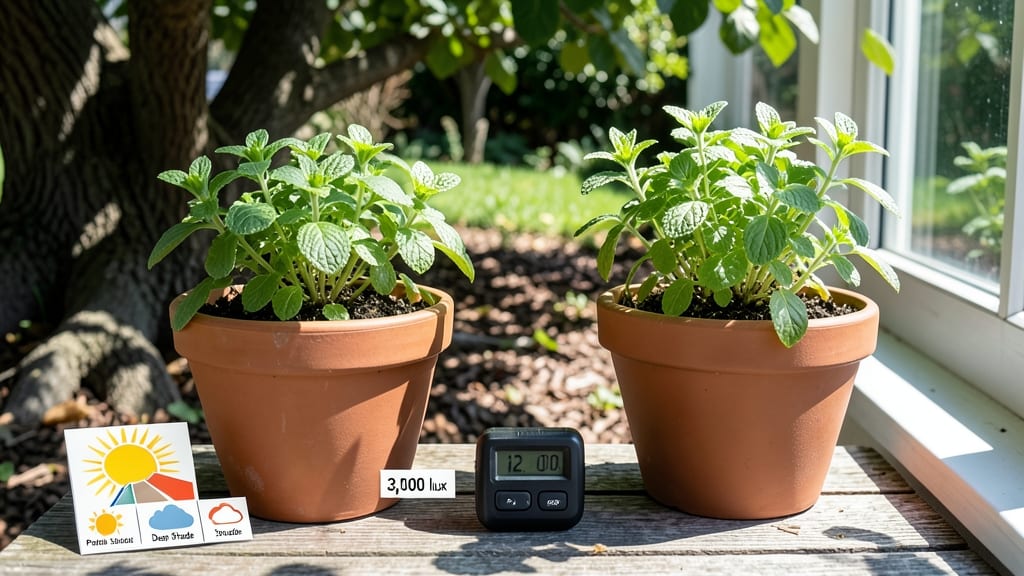
To grow lush, fragrant mint, you need the right balance of light—too much sun scorches those delicate leaves, while too little leaves your plant stretching weak and leggy.
This herb thrives in bright indirect light, making it perfect for kitchen windows or partially shaded garden spots in zones like 6a.
Mint’s ideal spot gets 4-6 hours of morning sun with afternoon shade, preventing the crispy edges that signal over-exposure. If your plant looks pale or flops over, it’s begging for more light—but don’t move it to full sun just yet.
The key is mimicking dappled shade, whether outdoors or indoors near an east-facing window.
Container gardeners, take note: mint in pots needs even more attention to light, as roots can’t spread to seek shade. A sheer curtain or rotating the pot ensures even growth.
And if your mint starts flowering? That’s your cue to trim it back—it’s focusing energy on seeds, not those flavorful leaves you’re after.
Let’s break down exactly how to spot light issues, adjust your setup, and keep your 🌿 mint bushy and productive all season long. Your tea and cocktails will thank you!

Ideal light requirements for mint plants: bright indirect sun explained
If you've ever wondered how much light does a mint plant need, you're not alone! Mint thrives in bright indirect sunlight, making it perfect for gardeners who want a fragrant herb without the risk of sunburn.
Unlike sun-loving herbs like basil, mint prefers 4 to 6 hours of morning sunlight followed by dappled shade. This balance prevents the delicate leaves from scorching while ensuring robust growth.
Mint plants naturally grow in woodland edges and stream banks, where they receive filtered sunlight. Replicating this environment in your garden or windowsill is key to unlocking their full potential.
Too much direct sun can cause leaf burn and yellowing, while too little light leads to weak stems and sparse foliage. Let's break down the perfect light conditions for your mint plants.
| Light Requirement | Specification | Ideal Conditions |
|---|---|---|
| Daily Sunlight | 4-6 hours | Morning sun, afternoon shade |
| Light Type | Bright indirect | East-facing window or dappled shade |
| Indoor Placement | Within 3 feet | East or south window |
| Outdoor Location | Partial shade | Under trees or near structures |
| Light Deficiency Signs | Weak stems | Pale leaves, slow growth |
| Light Excess Signs | Brown patches | Yellowing, crispy edges |
For outdoor mint plants, position them in a spot that receives morning sunlight and afternoon shade. If your garden gets intense afternoon sun, consider placing mint near a north-facing wall or under deciduous trees that provide natural shade during the hottest hours.
This mimics their natural habitat and prevents leaf scorch, which can turn your vibrant green mint into a sad, brown mess.
Indoor mint plants need similar conditions. Place your pot within 3 feet of an east-facing window to capture gentle morning light. If you only have a south-facing window, use a sheer curtain to diffuse the light and prevent direct exposure.
Avoid west-facing windows, as the harsh afternoon sun can quickly damage delicate mint leaves. Rotate your plant every few days to ensure even growth and prevent it from leaning toward the light source.
One of the most common mistakes gardeners make is assuming mint can handle full sun like other herbs. While mint can tolerate up to 6 hours of direct sunlight, exceeding this can lead to burnt leaves and stunted growth.
Keep an eye out for yellowing leaves or crispy edges—these are clear signs your mint is getting too much sun. If you notice these symptoms, move your plant to a shadier spot immediately to prevent further damage.
On the flip side, insufficient light causes mint plants to become leggy and sparse. If your mint starts stretching toward the light with weak stems and widely spaced leaves, it's time to adjust its location.
Consider supplementing with a grow light for 6-8 hours daily if natural light is limited. LED grow lights are energy-efficient and perfect for keeping your mint thriving indoors during the winter months when daylight is scarce.
Mint is incredibly adaptable, but getting the light right is crucial for maximizing flavor and growth. When your mint receives the ideal 4-6 hours of bright indirect light, you'll be rewarded with lush, aromatic leaves perfect for teas, cocktails, or fresh salads.
Pay attention to your plant's signals—it will tell you exactly what it needs through its leaves and stems!
Pro tip: If you're growing mint in containers, choose a pot with good drainage and place it on a saucer to catch excess water. This helps prevent root rot, which can occur when mint is stressed from improper light conditions.
A happy mint plant is a productive one, so keep an eye on both its light exposure and watering needs for the best results.
With the right light conditions, your mint plant will flourish into a fragrant, fast-growing herb that's ready for harvest in as little as 60-75 days. Whether you're a seasoned gardener or a beginner, mastering mint's light requirements will set you up for success in your herb garden. Happy growing!
How to provide perfect light for mint: indoor vs outdoor solutions
Mint thrives in bright indirect light, but getting the balance right—especially indoors—can feel like solving a puzzle. Too little light, and your plant stretches toward the window like a sleepy cat; too much, and those crispy brown edges scream "sunburn!"
The good news? With a few simple adjustments, you can replicate mint’s natural habitat, whether it’s on your kitchen windowsill or in your garden’s dappled shade.
Outdoor mint loves morning sun paired with afternoon shade, mimicking the 4-6 hours of light it craves. Indoors, an east-facing window is your best friend, offering gentle morning rays without the harsh afternoon heat.
But what if your space only has north-facing light or a dim corner? Don’t worry—grow lights and strategic placement can save your mint from a leggy fate.
- 4-6 hours of bright indirect light daily—morning sun is ideal, avoid harsh afternoon rays.
- East-facing windows provide perfect light; south-facing may need sheer curtains to diffuse intensity.
- Grow lights (12-16 hours/day) work for low-light spots—keep them 6-12 inches above the plant.
- Rotate pots weekly to prevent uneven growth toward the light source.
- Outdoor mint needs seasonal adjustments: partial shade in summer, more sun in winter.
For indoor mint, start by placing your pot within 3 feet of an east-facing window. If your plant leans toward the light, it’s not getting enough—try rotating it quarter-turns every few days to encourage even growth.
A sheer curtain can also diffuse harsh light if your window faces south or west. Pro tip: If your mint starts flowering, trim those buds immediately—they signal it’s shifting focus from leaves to seeds, which means weaker flavor and growth.
When outdoor conditions shift, adapt your mint’s light exposure. In summer’s intense heat, move potted mint to a shadier spot (like under a tree canopy) to prevent leaf scorch.
In winter’s weaker light, give it a few extra hours of sun if possible, or supplement with a grow light for 4-6 hours daily. Just remember: mint’s roots are shallow, so containers dry out faster—keep soil consistently moist but never soggy.
If you’re using grow lights, opt for full-spectrum LEDs (12-16 hours/day) and position them 6-12 inches above the plant. Too far away, and your mint won’t get enough; too close, and you’ll risk burning those tender leaves.
Test the setup for a week, then adjust based on your plant’s response. Look for dark green, bushy growth—that’s your cue you’ve nailed the light!
Seasonal adjustments are key for outdoor mint. In spring and fall, it can handle morning sun and afternoon shade, but summer’s heat demands more protection.
Mulch around the base to keep roots cool and hydrated, and watch for signs of stress: yellowing leaves mean too much sun, while pale, elongated stems scream for more light. With these tweaks, your mint will stay lush, aromatic, and ready for harvesting all season long.