
Watering
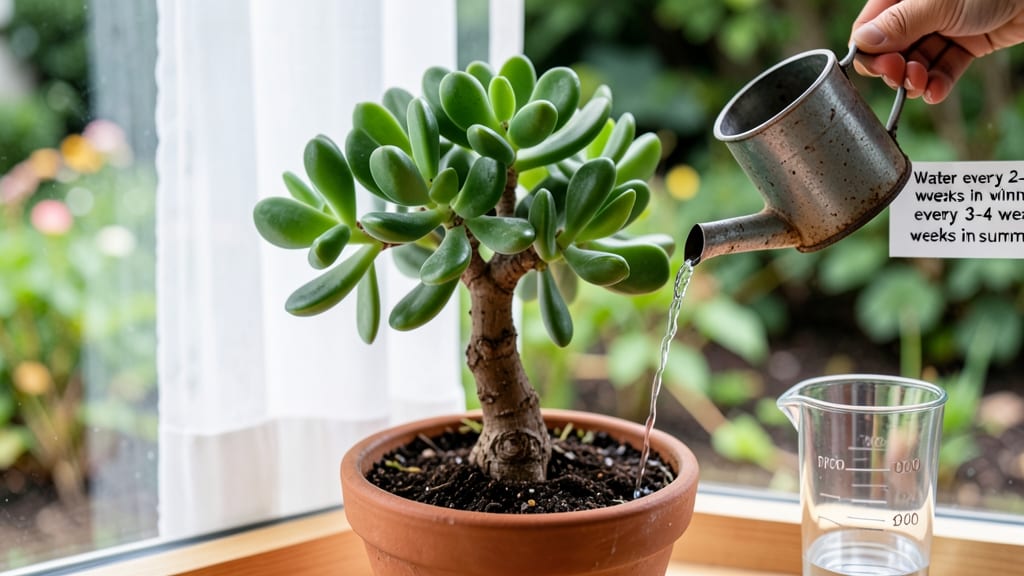
How to test soil dryness in jade plants (3 methods that work)
Your jade plant thrives on dry soil, but guessing when to water leads to either wrinkled leaves or root rot. Testing soil moisture scientifically ensures your succulent stays healthy.
The key? Check 1-2 inches deep—where the roots actively absorb water. Most gardeners overwater because they check the surface, which dries faster than the root zone.
Jade plants store water in their leaves, so they prefer bone-dry soil between waterings. A simple finger test works for most gardeners, but if you're unsure, a moisture meter or weight method gives precise results.
Each technique has its pros: the finger test is free, the meter is fast, and the weight method is foolproof for heavy pots.
Here’s how to test soil dryness accurately—plus the best time to water your jade plant based on the results:
Step-by-Step Soil Dryness Test for Jade Plants
-
Finger Test (Best for Beginners)
- Insert your index finger 1-2 inches deep into the soil.
- If soil feels completely dry (like sand), it’s time to water.
- If slightly damp, wait 3-5 more days before checking again.
-
Moisture Meter (Fastest Method)
- Plunge the meter’s probe 1-2 inches deep into the soil.
- Read the display: 0-2 (dry), 3-4 (moist), 5+ (wet).
- Water only if reading is 0-2—never wait for "moist" readings.
-
Weight Method (Most Accurate)
- Lift your potted jade plant—if it feels light as a feather, soil is dry.
- If heavy, roots are still holding moisture—wait 1 more week.
- Works best for clay or ceramic pots (plastic hides weight changes).
After testing, water your jade plant thoroughly until water drains from the pot’s holes. Empty the saucer afterward—sitting water is the #1 killer of jade plants. In summer, you might water every 3-4 weeks, while winter slows growth, so stretch waterings to 6 weeks.
Overwatering causes yellow leaves and mushy stems, while underwatering leads to shriveled, puckered leaves. Both are fixable, but prevention is easier. Stick to these methods, and your jade plant will stay plump and happy for years.
For extra peace of mind, combine the finger test with the weight method—especially in humid climates where soil stays damp longer. Your jade plant’s health depends on consistency, not guesswork.
🌱
Jade plant watering schedule by season (with exact frequency)
Your jade plant thrives on a consistent watering routine, but seasons change its needs dramatically. In spring and summer, higher temperatures and humidity demand less frequent watering than most gardeners assume.
Meanwhile, fall and winter slow evaporation, requiring you to adjust your schedule—or risk soggy soil. The key? Understanding how temperature and humidity affect evaporation rates, not just sticking to a calendar.
Think of your jade plant like a succulent cactus—it stores water in its thick leaves and stems. This means it’s far more resilient to drought than many houseplants. However, overwatering in winter can still trigger root rot, even when growth slows.
The solution? A seasonal watering checklist that accounts for indoor humidity levels and temperature fluctuations. Let’s break it down by season so you never guess again.
| Season | Watering Frequency | Soil Dryness Test | Notes |
|---|---|---|---|
| Spring | Every 2-3 weeks | Top 1-2 inches dry | Increase frequency if humidity drops below 40% |
| Summer | Every 3-4 weeks | Top 2-3 inches dry | Reduce if indoor AC runs constantly |
| Fall | Every 2-3 weeks | Top 1-2 inches dry | Watch for cooler nights slowing evaporation |
| Winter | Every 4-6 weeks | Top 2-3 inches dry | Heating systems dry air—check soil often |
In spring, your jade plant wakes up from dormancy, and new growth signals it’s time to increase water slightly.
Aim for every 2-3 weeks, but always check the top 1-2 inches of soil—if it’s dry, water thoroughly until it drains from the bottom. Spring humidity can be unpredictable, so keep an eye on your plant’s leaves.
If they start wrinkling slightly, it’s a sign to water sooner.
When summer heat arrives, evaporation speeds up, and your jade plant’s water needs drop surprisingly. Stretch watering to every 3-4 weeks, letting the soil dry out completely between sessions.
Place your plant near a south-facing window for bright light, but avoid direct afternoon sun, which can overheat the pot. Pro tip: Group jade plants together to create a microclimate with stable humidity, reducing stress on individual leaves.
As fall temperatures cool, your jade plant’s growth slows, and watering needs shift back toward spring levels. Every 2-3 weeks is ideal, but monitor for cooler nights, which can slow evaporation.
If your home has forced-air heating, the dry air may require more frequent checks—even if the calendar says it’s time to wait. Always water in the morning to prevent fungal risks from evening moisture.
Winter is the most critical season for jade plant care, as many gardeners overcompensate for slow growth. Water every 4-6 weeks, letting the soil dry out completely to prevent root rot.
Heating systems create dry indoor air, so check soil moisture with your finger—if the top 2-3 inches feel dry, it’s time. Place a humidity tray nearby to mimic natural conditions, or mist the leaves lightly (but avoid soggy soil).
Remember: temperature and humidity are your best friends when watering jade plants. Use this seasonal checklist as a guide, but always test soil moisture before watering. Your jade plant will reward you with thick, glossy leaves and years of trouble-free growth—no guesswork required. 🌿