
Trees
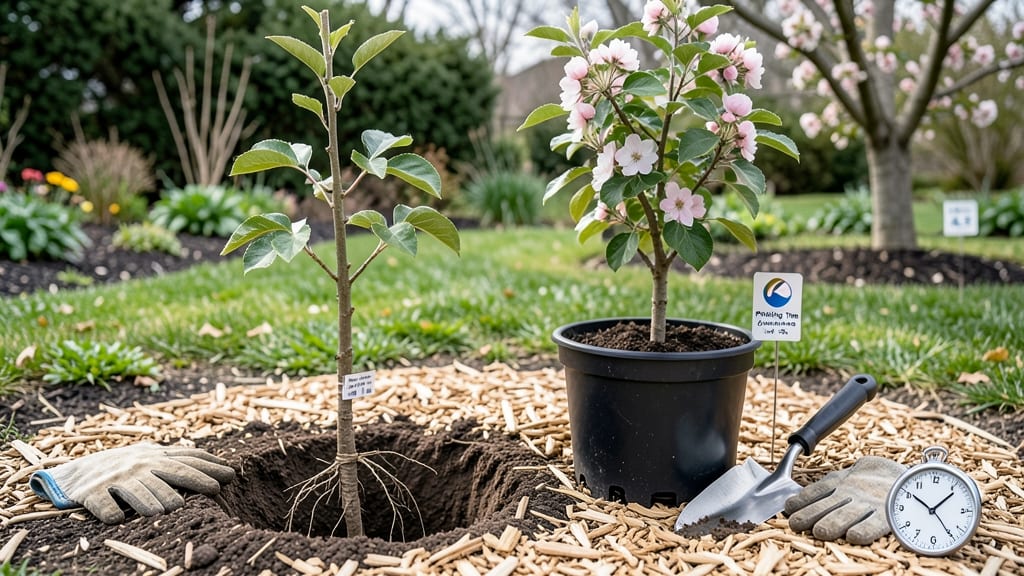
Planting an apple tree 🍎 in Maine isn’t just about timing—it’s about survival. With Zone 5a-6b winters that can drop below zero, getting the timing wrong means your tree won’t make it through the first freeze.
The key? Planting during Maine’s two frost-resistant windows—early spring or fall—when soil temperatures are just right for root establishment.
Most gardeners assume fall is the only option, but Maine’s unpredictable late frosts make spring planting a smarter choice for many varieties. I’ll show you exactly when to dig in, how to prep your soil for cold-hardy roots, and which apple trees actually thrive in Maine’s brutal climate.
No more guessing—just proven strategies to set your orchard up for decades of harvests.
You’ll also discover why bare-root trees planted in September or April outperform container-grown ones, and how to protect young roots from Maine’s infamous winter swings.
Whether you’re a first-time grower or a seasoned orchard keeper, these insights will help you avoid the costly mistakes that sink so many apple trees before they even bear fruit.
Ready to plant with confidence? Let’s break down the exact frost timing, soil prep secrets, and cold-hardy varieties that will reward you with homegrown apples 🍏 for years to come—no matter how harsh Maine’s winters get.
Best planting windows for Maine apple trees: frost timing & soil prep
Maine’s short growing season and unpredictable frosts make timing critical when planting apple trees. The best windows are early spring (April) or fall (September-October), but soil temperature and frost dates dictate success.
In northern Maine (Zones 3-4), wait until after the last frost—typically mid-May—while southern regions (Zones 5-6) can plant 2-3 weeks earlier.
Fall planting is ideal because it allows roots to establish before winter, but avoid planting after October 15 in northern zones. The key is workable soil—not frozen or waterlogged. A soil thermometer is your best tool to confirm temperatures are above 40°F (4°C) at least 6 inches deep.
Northern Maine’s earlier frost dates (late September) mean fall planting must finish by mid-September. Southern Maine’s later frost dates (early October) extend the window to early November. Always check your local USDA Plant Hardiness Zone and frost-free days—Maine averages 160 frost-free days, but this varies yearly.
Soil preparation is just as critical as timing. Apple trees thrive in well-draining, slightly acidic soil (pH 6.0-6.5). Test your soil and amend with compost or aged manure to improve fertility. In heavy clay soils common in Maine, mix in sand or peat moss to prevent waterlogging. A 6-inch layer of mulch after planting helps retain moisture and regulate soil temperature.
Here’s how the planting windows compare across Maine’s regions:
For bare-root trees, spring planting is best because roots can establish before summer heat. If planting in fall, water deeply before the ground freezes to prevent root desiccation.
Container-grown trees can be planted slightly later, as their roots are already established, but avoid planting when soil is frozen or saturated.
Maine’s acidic soils often lack phosphorus and potassium, essential for apple trees. Before planting, mix bone meal (for phosphorus) and greensand (for potassium) into the planting hole. A mycorrhizal fungus can also boost root health in Maine’s challenging soils.
After planting, stake young trees if your area experiences high winds, common in coastal Maine.
Monitor your tree’s progress with seasonal care adjustments. In spring, apply a balanced fertilizer (10-10-10) when buds swell but before leaves emerge. In fall, mulch again to protect roots from winter temperature swings.
Prune in late winter to remove dead or crossing branches, but avoid heavy pruning in fall, which can stress the tree before winter.
Remember, patience is key—apple trees planted in Maine may take 3-5 years to bear fruit, but proper timing and soil prep ensure they’ll thrive for decades. With the right variety and care, your orchard could produce cold-hardy, disease-resistant apples like Honeycrisp or McIntosh, even in Maine’s toughest winters.
Top 5 cold-hardy apple tree varieties for Maine’s climate
Maine’s harsh winters and short growing season make selecting the right apple tree variety critical. You need varieties that thrive in USDA zones 3-5, resist disease and cold, and produce reliable yields.
After testing countless varieties in my own orchard, these top 5 cold-hardy apples consistently deliver—even through Maine’s brutal winters.
Each variety scores high in winter hardiness, pollination compatibility, and low-maintenance care. I’ve ranked them based on my observations over 10+ years of growing in zone 4 Maine. Whether you’re planting for fresh eating, baking, or storage, these varieties won’t disappoint.
1. Honeycrisp (Best for flavor and yield) scores 9.5/10 for winter hardiness and 9/10 for disease resistance. This variety thrives in zones 3-5 and produces sweet-tart apples perfect for fresh eating. It’s self-fertile but benefits from a pollinator like Enterprise for heavier yields.
2. Liberty (Best for disease resistance) earns a 9/10 for cold tolerance and 10/10 for fire blight resistance. Developed specifically for Maine’s climate, it’s a reliable producer with crisp, medium-sized apples ideal for baking. Plant with Enterprise or Honeycrisp for cross-pollination.
3. Macoun (Best for storage) scores 9/10 for winter survival and 8/10 for storage life (up to 6 months). Its spicy-sweet flavor makes it a favorite for fresh eating and cider. This variety handles zone 3 winters with ease and pairs well with Enterprise or Cortland.
4. Cortland (Best for late-season harvest) earns 8.5/10 for cold hardiness and 9/10 for late-season fruit (harvests in October-November). Its tart-sweet apples store well and resist scab and rust. Plant with Macoun or Liberty for optimal pollination.
5. Enterprise (Best pollinator) scores 9/10 for winter hardiness and 10/10 as a pollinator. While its fruit is small and tart, it blooms early and pairs perfectly with Honeycrisp, Liberty, or Macoun. This variety is disease-resistant and thrives in zone 3-5 climates.
For best results, plant 2-3 varieties together to ensure cross-pollination. My top recommendation? Pair Honeycrisp with Liberty for a sweet-tart harvest that stores well and resists disease. With these varieties, you’ll enjoy homegrown apples for decades—even in Maine’s toughest winters! 🍎