
Plants
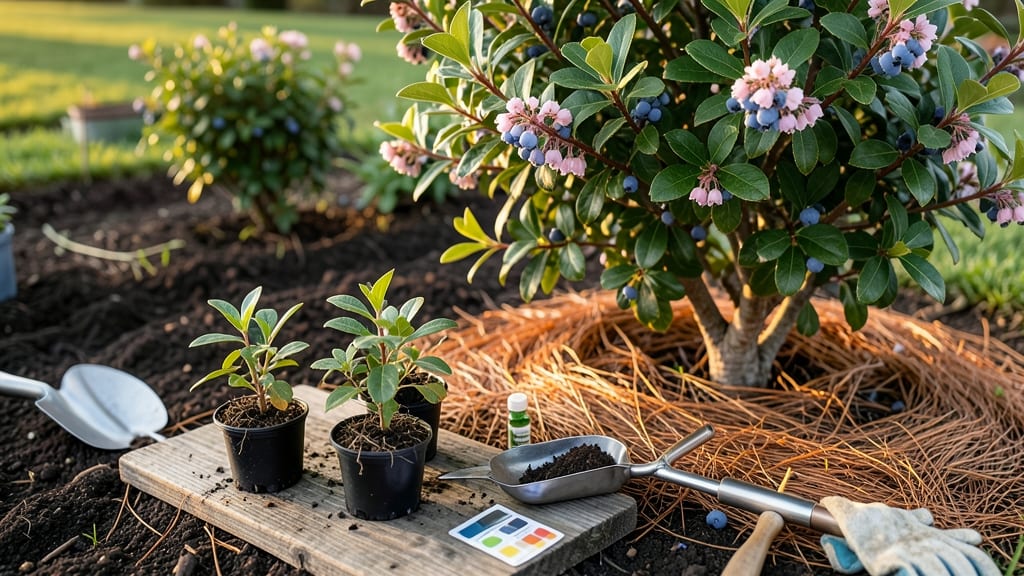
Planting blueberries in Maryland isn’t just about grabbing a bush and sticking it in the ground—it’s about timing it perfectly to beat the heat, avoid frost, and give your 🫐 bushes the best shot at thriving.
Skip the wrong window, and you’ll end up with stunted growth or berries that never ripen. The secret? Understanding Maryland’s 6a-7b climate zones and when to plant for maximum success.
Most Maryland gardeners swear by early spring (March-April) or fall (September-October) planting, but not all blueberry varieties play by the same rules. Highbush types need chill hours to set fruit, while rabbiteye varieties might handle Maryland’s milder winters differently.
I’ll break down the exact months for each, so you know whether to dig in the cool of spring or the crisp air of fall.
Beyond timing, Maryland’s humid summers and clay-heavy soil demand extra prep work—think acidifying your soil, mulching right, and picking the sunniest spot in your yard. Get this wrong, and even the best planting window won’t save your bushes.
Let’s make sure you’ve got every detail covered so your blueberries grow strong and your harvest is packed with sweet, juicy berries.
Ready to skip the guesswork? I’ll walk you through step-by-step, from soil tests to post-planting care, so your blueberries thrive year after year—no matter what Maryland’s weather throws at them.
Best planting months for blueberries in Maryland by variety and chill-hour requirements
Maryland’s USDA zones 5b-7b offer ideal conditions for blueberries, but the chill-hour requirements of each variety dictate the perfect planting window. Highbush varieties (most common) need 300-900 chill hours, while rabbiteye types thrive with 400-700 hours.
Planting at the wrong time can delay fruiting by years—so let’s get this right.
For spring planting, aim for March through April when soil temperatures rise above 45°F. This gives roots time to establish before summer heat stress hits. Fall planting (late September to October) is also ideal, allowing roots to grow before winter dormancy sets in.
Here’s how Maryland’s microclimates affect your timing: Northern counties (like Frederick) with higher chill hours can plant slightly earlier, while Southern areas (like Calvert) should wait until soil warms. Half-high varieties (3-5 ft tall) adapt best to Maryland’s humid summers.
🌱
| Variety Type | Chill-Hour Needs | Best Planting Months | Maryland Zones | Notes |
|---|---|---|---|---|
| Highbush (e.g., 'Bluecrop') | 300-900 hrs | March-April or Sept-Oct | 5b-7b | Most popular; needs acidic soil |
| Rabbiteye (e.g., 'Climax') | 400-700 hrs | April-May or Sept | 6a-7b | Larger berries; warmer climate |
| Half-High (e.g., 'Top Hat') | 300-600 hrs | March-April or Sept | 5b-7a | Compact; great for containers |
| Early Season (e.g., 'Jersey') | 500-800 hrs | March-April | 5b-6b | Ripe by early July |
| Late Season (e.g., 'Patriot') | 600-900 hrs | April-May or Sept | 6a-7b | Ripe by late August |
If you’re planting bare-root blueberries, do it in early spring (March) when soil is workable but frost risk is low. Container-grown plants can go in until late April, but avoid planting in summer heat—roots can’t establish properly.
For fall planting, focus on September in Maryland’s northern zones (like Baltimore) or early October in southern areas (like Annapolis). This gives roots time to grow before first frost (typically mid-November). Mulch heavily with pine straw to protect roots.
Pro tip: Test your soil’s pH before planting—blueberries need 4.5-5.5. Maryland’s native soils are often alkaline, so amend with sulfur or peat moss 2-3 months before planting. Evergreen varieties (like 'Bluecrop') handle Maryland’s winters better than deciduous types.
🌿
In USDA zone 5b (northern Maryland), prioritize high-chill varieties like 'Duke' or 'Earliblue'. In zone 7b (southern Maryland), opt for low-chill types like 'Southern Highbush' or 'Peach Sorbet'. Transplant shock is less likely if you plant when soil temps are 50°F+.
Remember: Blueberries are perennial, so planting at the right time ensures decades of harvests. Label your varieties and track their first fruiting year—most take 2-3 years to produce. Patience pays off with Maryland’s sweet, homegrown blueberries!
☀️
How to prepare your Maryland soil and site for blueberry planting success
Maryland’s clay-heavy soils and humid summers can make or break your blueberry bushes if you don’t prep properly. Blueberries thrive in acidic soil (pH 4.5-5.5), but most Maryland yards are naturally alkaline—often testing between 6.5 and 7.5.
Without adjusting your soil, your bushes will suffer from nutrient deficiencies and weak growth, no matter how perfect your planting window is.
Start by testing your soil’s pH and organic matter at least 6-8 weeks before planting. Maryland’s USDA zones 6a-7b mean you’ll need to amend soil differently in cooler northern areas (like Baltimore County) versus warmer southern regions (like Calvert County).
I’ve seen gardeners skip this step and end up with bushes that barely produce berries—don’t let that be you!
⚠️ WARNING: Maryland’s Soil Pitfalls ⚠️
Your blueberries will suffocate in compacted, alkaline soil. Even with perfect timing, poor drainage and high pH will stunt root growth and prevent fruiting. Test your soil first—use a home pH test kit (around $10) or send a sample to the University of Maryland Extension for professional analysis. Their lab tests cost about $25 and give you precise recommendations.
If your soil tests above pH 6.0, you’ll need to lower it by 1.0-1.5 points before planting. This isn’t a quick fix—it takes 3-6 months of consistent amendments. Never plant in unamended soil, even if you’re following the ideal planting window!
To acidify your soil, mix in organic matter like peat moss or sulfur-coated urea. For every 100 square feet, add 3-5 pounds of elemental sulfur and 2-3 inches of compost.
Work these into the top 12 inches of soil and water thoroughly. Maryland’s humid climate speeds up decomposition, so re-test your soil 4-6 weeks after amending to check progress.
Next, focus on drainage and sunlight. Blueberries hate soggy roots, so pick a spot with well-draining soil and avoid low-lying areas where water pools.
If your yard has heavy clay, consider planting in a raised bed filled with a mix of 50% peat moss, 30% compost, and 20% perlite.
For sunlight, choose a location with at least 6-8 hours of direct sun daily—partial shade in Maryland’s summer heat can reduce berry production by up to 40%.
Mulching is another critical step for Maryland gardeners. Use 3-4 inches of pine bark mulch (which naturally acidifies over time) and keep it 6 inches away from the plant stem to prevent rot. Replenish mulch annually in early spring to maintain soil acidity and moisture.
In winter, add an extra 2 inches of mulch to protect roots from freeze-thaw cycles common in Maryland’s USDA zone 6a areas.
Finally, protect your blueberries from wind and pests. Maryland’s coastal areas (like Annapolis) get salty winds that can damage leaves, while inland regions face deer and rabbit pressure. Install a windbreak with evergreens if needed, and use wire cages for young plants until they’re established.
With these steps, your blueberries will have the perfect Maryland-friendly foundation to thrive—no matter when you plant them!