
Plants
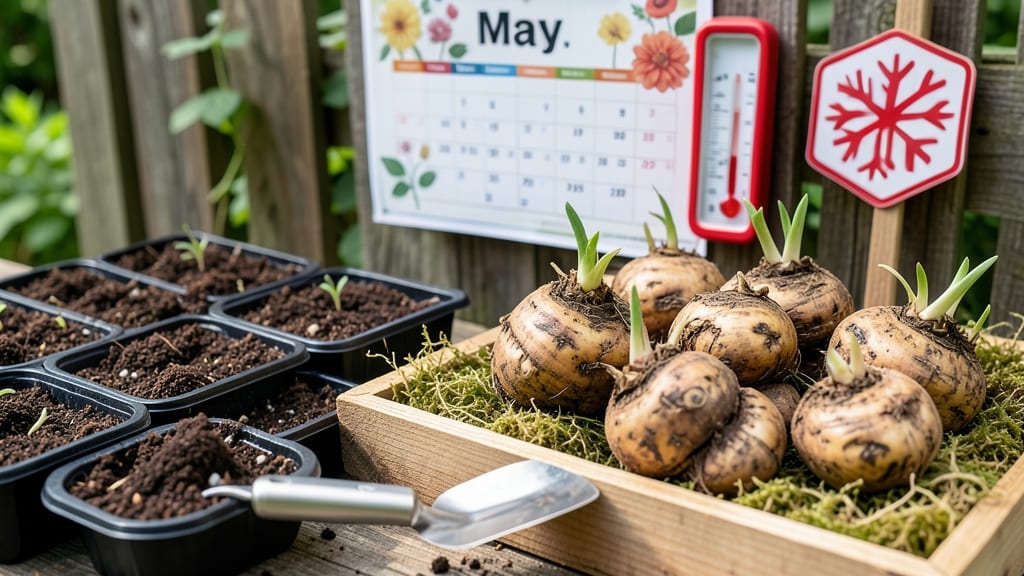
Planting dahlias in Kansas can make or break your blooming season—get the timing wrong, and you might miss out on those stunning 🌼 flowers entirely.
The key isn’t just waiting for spring; it’s understanding your county’s USDA Zone 5b-7a and when the soil finally warms enough to protect those tender tubers.
Most Kansas gardeners know the general rule: wait until after the last frost, usually around April 15 to May 15. But here’s the catch—soil temperature matters just as much as air temperature.
If you plant too early, your dahlias could rot in cold ground, while waiting too long might stunt their growth before summer’s peak.
I’ve learned the hard way that soil at 60°F is the sweet spot for planting these showstoppers. That means checking your local frost dates and adjusting for your specific heat zone—whether you’re in Wichita’s Zone 7a or Topeka’s Zone 6b.
Let me walk you through the exact timeline and prep work to ensure your dahlias thrive all season long.
From soaking tubers to spacing them just right, these Kansas-specific tips will help you avoid common mistakes and get the most vibrant blooms from July through October. Ready to turn your garden into a dahlia paradise? Let’s get started.
Kansas county heat zones: when to plant dahlias by USDA Zone
Kansas spans USDA Zones 5b to 7a, meaning your dahlia planting window shifts from north to south. In cooler northern counties like Sherman (Zone 5b), wait until mid-May when soil warms to 60°F (15°C).
Southern counties like Wichita (Zone 7a) can plant as early as late April. These differences matter—planting too soon risks frost damage, while waiting too long cuts bloom time.
Local last frost dates vary wildly: March 31 in Garden City (Zone 6a) vs. April 15 in Topeka (Zone 6b). Use these as guides, not rules—always check weekly forecasts before planting. Soil temperature, not air temperature, determines readiness. A soil thermometer (under $15) is your best tool.
Dahlias need 4-6 weeks of warm soil to establish roots.
In Zone 5b, that means waiting until May 1-May 15; in Zone 7a, you can plant by April 15-April 30. Heat stress is another risk: Southern Kansas summers hit 95°F+, so mulch heavily to protect tubers from drying out.
🌼
| County/Zone | Avg. Last Frost | Plant Window | Soil Temp Goal | Heat Risks |
|---|---|---|---|---|
| Sherman (Zone 5b) | May 1 | May 15–May 30 | 60°F (15°C) | Late frosts, short season |
| Salina (Zone 6a) | April 15 | April 30–May 15 | 60°F (15°C) | Variable spring temps |
| Topeka (Zone 6b) | April 1 | April 15–April 30 | 55°F (13°C) | Humidity stress |
| Wichita (Zone 7a) | March 15 | April 1–April 15 | 50°F (10°C) | Summer drought |
| Garden City (Zone 6a) | March 31 | April 15–April 30 | 55°F (13°C) | Windburn risk |
Northern Kansas gardeners face late frost threats even in May. Use row covers or plant near windbreaks (like fences or shrubs) to protect tender shoots. In Zone 5b, consider starting tubers indoors in late March for a head start.
Southern counties must watch for summer heat stress—dahlias wilt in 100°F+ without shade cloth or afternoon watering.
Soil preparation is critical. Dahlias thrive in loamy soil with pH 6.5–7.0. Amend heavy Kansas clay with compost or sand to improve drainage. A 3-inch layer of mulch (straw or shredded leaves) retains moisture and regulates soil temperature.
Test your soil’s organic matter—aim for 5% or higher for optimal growth.
If you miss the ideal window, don’t panic. Container-grown dahlias can be planted 2 weeks later than in-ground tubers, as pots warm faster. Just reduce your expected bloom time by 2–3 weeks.
For extended-season blooms, choose early varieties like 'Café au Lait' (Zone 3–9) or heat-tolerant types like 'Thomas Edison' (red, thrives in heat).
Track your local microclimate—urban areas like Kansas City stay warmer than rural fields. Use a neighbor’s garden as a reference: If their dahlias are already blooming, it’s safe to plant! Color changes in nearby leaves (from green to yellow) signal soil warmth—a natural cue to start planting.
🌱
Protect your investment with cold frames or black plastic mulch to accelerate soil warming in cooler zones. In Zone 5b, I’ve seen gardeners use heat mats ($20–$30) under containers to shave off critical weeks.
Pair this with drip irrigation to maintain consistent moisture—Kansas summers can dry soil 2 inches deep in 48 hours.
Remember: Dahlias reward
Step-by-step dahlias planting timeline for Kansas gardeners
Now that you’ve picked your USDA Zone and last frost date, let’s dive into the exact steps to prepare and plant dahlias for maximum blooms in Kansas.
The key phases—soaking tubers, hardening off, and proper spacing—make all the difference between a thriving garden and a sad, stunted display.
Start by soaking your tubers 4–6 hours before planting. Place them in lukewarm water (not hot) with a few drops of hydrogen peroxide (1 tsp per gallon) to prevent rot.
This jumpstarts root growth and ensures your dahlias establish faster in Kansas’s 60°F+ soil. Pro tip: Use a mesh bag to keep tubers together—this mimics their natural clustering underground.
🌱
-
Step 1: Soak Tubers (2–4 Weeks Before Planting)
Place tubers in lukewarm water with hydrogen peroxide for 4–6 hours. Discard any mushy or rotting sections. -
Step 2: Harden Off (1 Week Before Planting)
Move tubers to a shady, sheltered spot outdoors for 2–3 hours daily, gradually increasing time to 8+ hours. -
Step 3: Plant at Correct Depth (After Last Frost)
Dig holes 4–6 inches deep (eyes facing up) and space tubers 12–24 inches apart, depending on variety (dwarf vs. standard). -
Step 4: Mulch Heavily (Immediately After Planting)
Apply 3 inches of straw or shredded leaves to retain moisture and regulate soil temperature in Kansas’s 95°F+ summers. -
Step 5: Water Deeply (First 2 Weeks)
Give 1–2 gallons per plant in the morning to encourage deep root growth. Avoid wetting foliage to prevent powdery mildew. -
Step 6: Fertilize Lightly (4–6 Weeks After Sprouting)
Use a 5-10-10 fertilizer (1 tbsp per plant) to promote blooms. Reapply every 4–6 weeks during the growing season.
Once your tubers are soaked, it’s time to harden them off. Place them in a shady, sheltered spot outdoors for 2–3 hours on the first day, gradually increasing to 8+ hours by planting day.
This mimics Kansas’s variable spring temperatures and prevents shock when you transplant them. If frost threatens after planting, cover young shoots with frost cloth—even in Zone 7a, late frosts can sneak in.
When planting, dig holes 4–6 inches deep with the eyes (growth nodes) facing up. Space tubers 12–24 inches apart, depending on the variety—dwarf dahlias (1–2 ft tall) need 12 inches, while standard types (4–7 ft) require 24 inches.
In Kansas’s clay-heavy soil, mix in compost or sand to improve drainage and prevent root rot.
After planting, mulch immediately with 3 inches of straw or shredded leaves. This keeps soil cool in summer and moist in drought-prone zones like Wichita. Water deeply once a week for the first 2 weeks, then adjust based on rainfall.
In Zone 5b, I’ve found that drip irrigation saves time and water compared to hand-watering.
🌼
Four to six weeks after sprouting, give your dahlias a light feeding of 5-10-10 fertilizer to encourage blooms. Reapply every 4–6 weeks during the growing season, but stop fertilizing by mid-September to allow tubers to harden off for winter.
Deadhead spent blooms regularly to encourage more flowers and prevent disease. In humid Kansas summers, space out plants for airflow to reduce powdery mildew risks.
Finally, stake or cage your dahlias before they get too tall. Kansas’s windy conditions (especially in western counties) can snap stems. Use bamboo stakes or tomato cages and tie stems loosely with soft garden twine. This keeps your dahlias upright and showcase-ready all season long.