
Trees
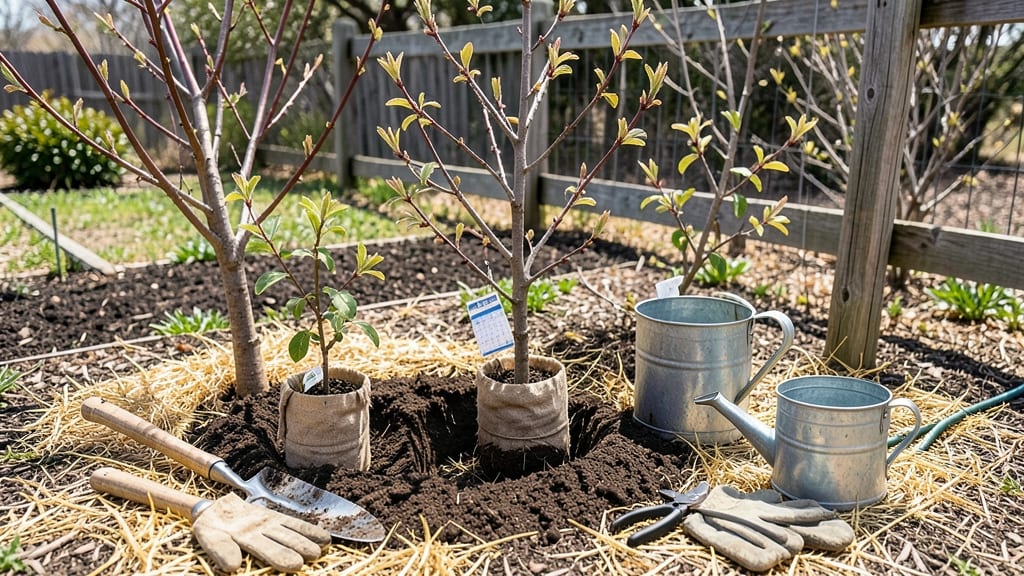
Timing your fruit tree planting in Colorado isn't just about picking a month—it's about matching your 🍎 varieties to the state's tricky chill hours and frost dates. Plant too early, and late frosts can wipe out delicate new growth; too late, and roots won't establish before winter sets in.
The sweet spot? Late winter to early spring, when the ground is workable but the trees are still dormant.
Most Colorado growers swear by planting between February and April, but the exact window depends on your USDA zone—whether you're in Denver's Zone 5 or the high-altitude Zone 3 of the Rockies.
High-chill varieties like apples need those cold winter months to bloom properly, while low-chill peaches can handle Colorado's shorter winters with the right timing.
I've learned the hard way that rushing the process—like planting in March without checking frost forecasts—can leave your young trees struggling. The key is preparing your soil in late winter, then getting those bare-root saplings in the ground as soon as the ground thaws.
For container-grown trees, spring planting works too, but you'll need to protect them from late frosts.
In this guide, I'll walk you through exactly when to plant based on your location, which varieties thrive where, and how to give your fruit trees the best shot at surviving Colorado's unpredictable weather. Let's get those roots growing strong for a harvest you'll actually get to enjoy.
Best planting months for Colorado fruit trees by chill-hour requirements
Colorado’s diverse elevations and microclimates demand precise timing for fruit tree success. High-chill varieties like apples and pears need 500–1,000 chill hours, while low-chill peaches and cherries thrive with 300–500 chill hours.
Planting too early risks late frosts, while waiting too long delays root establishment. Let’s break down the optimal windows for Colorado’s USDA Zones 3–7.
For high-altitude areas (Zones 3–5, e.g., Steamboat Springs), aim for late winter to early spring (February–March). Lower elevations (Zones 6–7, e.g., Denver or Colorado Springs) can extend planting to April.
Fall planting is risky due to early frosts, but container-grown trees can handle it if planted by mid-September.
🌱
In Zone 3 (e.g., Grand Junction), prioritize early March planting to avoid late frosts. Use row covers for young trees if frost warnings persist.
For Zone 7 (e.g., Pueblo), extend planting to mid-April—but monitor 10-day forecasts for cold snaps. Bare-root trees planted in February can establish roots before bud break, while container-grown trees handle April planting better.
Colorado’s high-altitude stress (e.g., 10,000+ ft) shortens growing seasons. Choose dwarf or semi-dwarf varieties (e.g., 'GoldRush' apple) and plant in well-draining soil with extra mulch to insulate roots. Avoid low-chill varieties in mountainous regions—they’ll fail to bloom.
🌿
Soil prep is non-negotiable. Colorado’s alkaline soils (pH 7.5–8.5) need amendments like sulfur or peat moss to reach ideal pH 6.0–6.5. Test soil 4–6 weeks before planting—this gives you time to adjust.
For urban gardens, opt for container planting with well-draining potting mix and larger pots (20+ gallons) for stability.
Watering deeply after planting (10–20 gallons) is critical. In Zone 4–5, add 2–3 inches of mulch to protect roots from freeze-thaw cycles. For Zone 6–7, reduce mulch to 1–2 inches to avoid overheating. Drip irrigation is ideal—it delivers water slowly at the root zone, reducing evaporation.
🪴
Timing isn’t just about months—it’s about tree readiness. Plant bare-root trees while dormant (before buds swell) to minimize transplant shock. For container-grown trees, plant anytime roots aren’t circling (check by gently removing soil).
If planting in fall, do it by September 15th in Zone 6–7 to allow root growth before winter.
Pro tip: Tag your trees with planting date and variety. This helps track chill hours and harvest readiness over time. Use a gardening journal to note local frost dates—Colorado’s microclimates can vary 10°F+
How to match fruit tree varieties to Colorado’s microclimates for maximum success
Colorado’s dramatic elevation shifts create microclimates where a 5,000-foot Front Range orchard might thrive with one variety while 8,000-foot mountain gardens need entirely different selections.
I’ve learned that planting a ‘Honeycrisp’ apple in Denver’s Zone 5 works beautifully, but the same tree struggles 2,000 feet higher where ‘Freedom’ apples dominate instead. The key is understanding how chill hours and elevation stress dictate your choices.
High-altitude areas like Steamboat Springs (Zone 4) demand varieties with 800+ chill hours, while lower desert regions near Pueblo (Zone 6) can handle lower-chill peaches and nectarines.
Even within cities, urban heat islands can push microclimates into earlier blooming cycles—meaning your cherry tree might flower weeks before rural counterparts. Let’s break down how to match trees to your specific conditions.
| Microclimate | Elevation Range | Best Varieties | Planting Window | Key Considerations |
|---|---|---|---|---|
| Front Range (Denver, Fort Collins) | 5,000–6,500 ft | ‘Freedom’ apple, ‘Honeygold’ pear, ‘Starking Delicious’ cherry | March 1–April 15 | Well-draining soil; watch for late frosts |
| High Plains (Colorado Springs) | 6,000–7,000 ft | ‘Lapins’ pear, ‘Montmorency’ tart cherry, ‘Elberta’ peach | March 15–April 30 | Alkaline soil; amend with sulfur |
| High Altitude (Aspen, Leadville) | 7,500–9,000 ft | ‘Antonovka’ apple, ‘Hardened’ plum, ‘Methley’ pear | April 1–May 15 | Short growing season; use dwarf rootstock |
| Southwest (Albuquerque NM border) | 4,500–5,500 ft | ‘Redhaven’ peach, ‘Black Diamond’ apricot, ‘Lodi’ apricot | February 15–March 30 | Hot summers; mulch heavily |
For urban gardeners in Denver, heat islands can push planting dates earlier by 2–3 weeks. I’ve seen ‘Starking Delicious cherries bloom in late April in city centers when rural areas still have frost risk.
If you’re in a paved or concrete-heavy area, consider container planting with dwarf varieties like ‘Columnar apples to escape microclimate extremes.
Soil drainage becomes critical at higher elevations. In Leadville (Zone 4), I’ve had ‘Antonovka’ apples fail because of poor drainage—even though they’re cold-hardy. Always test your soil’s percolation rate and amend with organic matter if water pools.
For sandy Front Range soils, add compost to retain moisture during Colorado’s dry springs.
Timing isn’t just about the calendar—it’s about chill accumulation. A ‘Lapins’ pear needs 700+ chill hours, which high-altitude areas get naturally, but low-chill ‘Sanguine’ plums (300 hours) work better near Pueblo’s warmer valleys. Use a chill-hour calculator to match your location’s winter patterns with your tree’s needs.
Remember: Bare-root trees must go in the ground while dormant, so plan for February–March planting in most zones. Container-grown trees offer more flexibility—you can plant them throughout spring—but always water deeply after planting to reduce transplant shock in Colorado’s dry winds. 🌱