
Plants
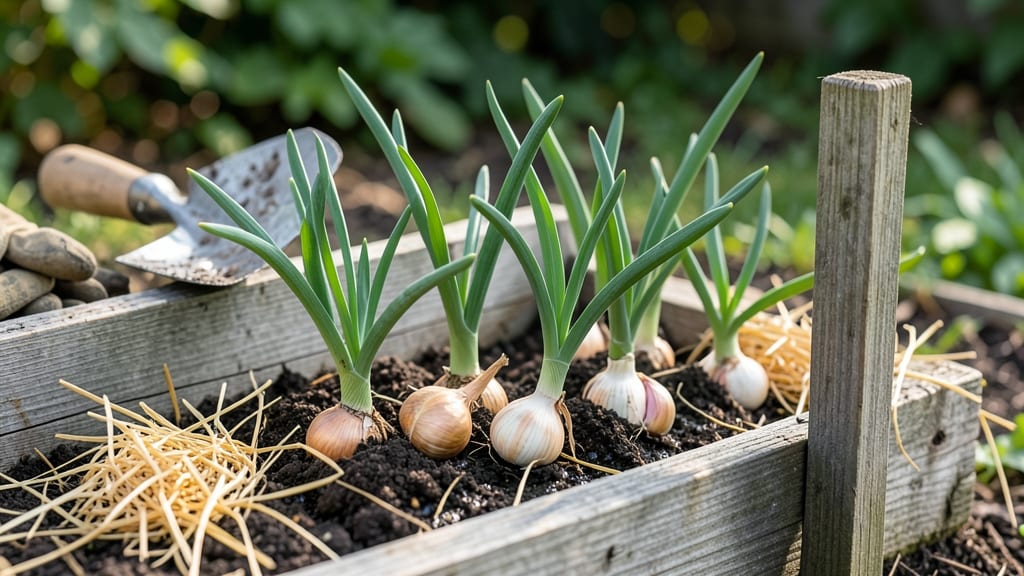
Planting garlic in Rhode Island isn't just about timing—it's about unlocking the secret to hardneck garlic that thrives in your 6b climate. Get the frost dates wrong, and you might end up with weak bulbs or no harvest at all.
But nail it, and you'll grow garlic so flavorful it'll make your neighbors ask for cloves.
Fall is the magic window for planting, between October and November, when the soil cools but hasn't frozen solid. This gives your 🧄 the perfect head start before winter sets in.
Coastal areas might need an earlier push, while inland spots can wait a bit longer—knowing your microclimate is key.
Hardneck varieties like 'German White' dominate in Rhode Island because they handle our short growing season like champs. Softnecks? Not so much. I'll show you exactly how to plant them 2 inches deep, space them right, and avoid the mistakes that ruin harvests.
Ready to grow garlic that's the envy of your garden? Let's dive into the frost-date guide that'll turn your fall planting into next summer's prize bulbs—without the guesswork.
Rhode Island’s ideal garlic planting window by frost dates
Timing your garlic planting to Rhode Island’s USDA Zone 6a/6b frost dates is the secret to bumper crops. Most gardeners here aim for a 4-6 week window before the ground freezes, but coastal areas like Newport have slightly different rules than inland spots like Providence.
The key is balancing soil temperature and frost timing—too early, and your cloves rot; too late, and they don’t establish roots before winter.
For hardneck garlic, the most popular choice in Rhode Island, your planting window opens in early October and closes around mid-November. This aligns perfectly with the state’s average first frost date of October 20, giving garlic enough time to root before the ground hardens.
Inland areas typically have 2-3 weeks earlier frost than coastal regions, so adjust your timing accordingly.
🌱
| Planting Window | USDA Zone 6a/6b | Soil Temp | Frost Adjustment | Best Varieties |
|---|---|---|---|---|
| Early October | Zone 6a (earlier frost) | 45-50°F | Inland areas | German White, Music |
| Mid-October | Zone 6b (later frost) | 40-45°F | Coastal areas | Silverskin, Rocambole |
| Early November | All zones (last chance) | 35-40°F | Use mulch heavily | Any hardneck |
Adjust dates 1-2 weeks earlier for inland areas, 1 week later for coastal regions.
If you’re planting in early October, focus on soil temperature—it should be between 45-50°F for optimal root growth. Use a soil thermometer to check; if it’s colder, wait a week or two.
For mid-November plantings, prioritize heavy mulching (6+ inches of straw) to insulate bulbs through winter. Coastal gardeners in places like Westerly can push their window slightly later due to milder ocean-influenced temperatures.
One common mistake is planting garlic too early, thinking it’ll give more time to establish. But cold, wet soil in September can cause cloves to rot before roots form. Aim for 4-6 weeks before your average first frost, and always plant when soil temps are consistently above 40°F.
For Rhode Island’s Zone 6a (inland), that’s typically October 1-15; for Zone 6b (coastal), it stretches to October 15-November 1.
Pro tip: Hardneck garlic thrives in Rhode Island’s climate because it’s bred to handle cold winters. Its scape production (those curly stems) is a bonus, but the real prize is the bold flavor that develops during our cold winters.
Softneck varieties, while popular in milder climates, often struggle with bolting (premature flowering) in Rhode Island’s short growing season, so stick with hardnecks like ‘German White’ or ‘Music’ for the best results.
For those who miss the fall window, spring planting is possible but less reliable. Plant in early April (as soon as soil is workable) for a smaller harvest that matures in late summer. However, spring-planted garlic often produces smaller bulbs and is more prone to pests like onion flies.
If you’re experimenting with spring planting, choose early-maturing varieties like ‘Creole’ and be prepared to harvest earlier.
Don’t forget to break apart garlic bulbs into individual cloves before planting—each clove becomes a new plant! Use the largest cloves for bigger harvests, but save smaller ones for next year’s planting.
Plant with the pointed end up, about 2 inches deep and 4-6 inches apart in rows spaced 12 inches apart. This spacing gives garlic room to grow and reduces disease risk from poor airflow.
After planting, mulch heavily with straw or leaves to protect bulbs from freeze-thaw cycles and keep soil temps stable. In coastal areas, this is especially critical as ocean breezes can create microclimates with sudden temperature swings.
Remove mulch in early spring (March) to let soil warm and stimulate growth. Watch for green shoots in late April—a sure sign your garlic is ready to thrive!
🌿
Hardneck vs. softneck garlic: which thrives in Rhode Island’s climate?
Rhode Island’s short growing season and cold winters make hardneck garlic the clear winner for gardeners here. Unlike softnecks, hardnecks thrive in our Zone 6b climate, developing bold flavors and scape production that softnecks simply can’t match.
The key difference? Hardnecks need cold vernalization—a process our winters provide—to form proper bulbs, while softnecks struggle with bolting in our unpredictable spring.
Let’s break down the critical differences between these two types. Hardnecks like ‘German White’ and ‘Music’ produce larger individual cloves with intense flavor, perfect for roasting or braiding. Softnecks, like ‘Silverskin’, store longer but often yield smaller, milder bulbs that don’t handle Rhode Island’s winters as well.
For most gardeners here, hardnecks are the only logical choice—unless you’re experimenting with spring planting for a tiny harvest.
Hardneck vs. Softneck Garlic in Rhode Island
Hardneck Garlic
- ✅ Best for RI: Thrives in cold winters ✅ Bold flavor: Intensifies with cold
- ✅ Larger cloves: Better for roasting
- ✅ Scape production: Edible bonus harvest
Best varieties: ‘German White’, ‘Music’, ‘Chesnok Red’
Softneck Garlic
- ❌ Struggles in RI: Often bolts prematurely
- ❌ Smaller bulbs: More cloves but weaker flavor
- ❌ No scapes: Less versatile harvest
- ❌ Stores longer: But quality suffers in cold
Best varieties: ‘Silverskin’, ‘Artichoke’ (only for spring planting)
🌱 Planting Depth: Hardnecks 2 inches deep; Softnecks 1.5 inches deep
One critical factor for Rhode Island gardeners is planting depth. Hardnecks need to be planted 2 inches deep to protect them from freeze-thaw cycles, while softnecks can handle shallower planting (1.5 inches).
This deeper placement also helps hardnecks establish stronger root systems before winter sets in. I’ve seen too many gardeners plant softnecks too deep by accident—resulting in weak, uneven bulbs that never reach their full potential.
Flavor is another game-changer. Hardneck varieties like ‘German White’ develop a rich, complex taste when grown in Rhode Island’s cold climate. The longer winter vernalization period actually enhances their flavor, making them ideal for grilling, roasting, or braiding.
Softnecks, on the other hand, tend to be milder and more uniform—great for general cooking but lacking the depth that hardnecks provide.
If you’re new to garlic growing, start with ‘German White’—it’s the most reliable hardneck for Rhode Island. Its large cloves and bold flavor make it a favorite among local gardeners.
For something with a spicier kick, try ‘Music’, which produces purple-striped bulbs and a fiery taste. Both varieties handle our winters like champs and reward you with high-quality harvests every summer.
Remember, timing is everything when planting hardnecks. Aim for October 1-15 in inland areas or October 15-November 1 near the coast. The 4-6 week window before frost gives your garlic just enough time to establish roots before winter sets in.
Skip the softnecks unless you’re experimenting with spring planting—and even then, expect smaller yields and more pest pressure.
🌿