
Plants
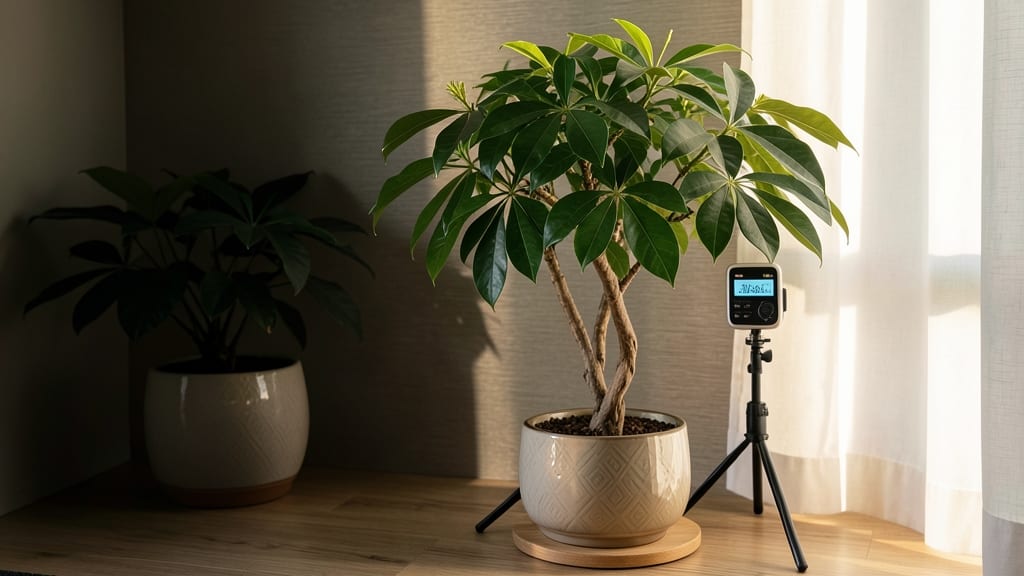
If your money tree 🌿 looks like it’s struggling with leggy stems or yellowing leaves, you’re probably dealing with light issues—because this plant needs how much light does a money tree plant need to thrive in bright indirect sunlight, not harsh or dim conditions.
Most people assume a Money Tree can handle low light, but that’s where growth problems start. Too little light leads to stretched, weak branches, while too much direct sun causes leaf scorch.
The key is finding that sweet spot—medium to bright indirect light—where your plant gets enough energy without stress.
I’ve helped countless Money Trees bounce back by adjusting their light exposure, and the results are always the same: fuller foliage, stronger stems, and a plant that actually looks like it belongs in your home. Let me show you exactly where to place yours for the best growth.
Whether you’re dealing with a west-facing window that’s too intense or a dim corner that’s stunting growth, I’ll walk you through the best solutions—including how to use artificial lights if natural light just isn’t cutting it.


Ideal light requirements for money tree growth: bright indirect sunlight explained
Your money tree (Pachira aquatica) thrives best under bright indirect sunlight, mimicking its natural tropical habitat. Too little light causes weak growth, while harsh direct rays scorch delicate leaves. Finding the perfect balance ensures lush foliage and robust trunk development.
Think of your money tree’s light needs like a goldilocks scenario—not too dim, not too harsh. The ideal spot receives 4-6 hours of filtered light daily, similar to dappled sunlight under a canopy. This prevents the leaf burn from intense rays while providing enough energy for photosynthesis.
| Light Requirement | Specification | Ideal Location |
|---|---|---|
| Bright Indirect Light | 4-6 hours daily | East or north-facing window |
| Low Light Tolerance | Survives 2-3 hours | Corner rooms, artificial grow lights |
| Direct Sunlight Risk | >2 hours causes burns | Avoid south/west windows |
For seasonal adjustments, reduce light exposure in summer by moving your money tree 5-10 feet back from windows. In winter, supplement with a 12-inch LED grow light for 6 hours daily if natural light drops below 3 hours/day. This prevents the stretching (etiolation) that signals light deprivation.
Identify the perfect spot by testing your windows: place a white sheet of paper near potential locations. If the paper stays cool to the touch after 2 hours, it’s safe for your money tree. Hot spots indicate direct sunlight that will damage leaves within days.
Mature money trees handle slightly lower light conditions than juveniles, but never below 1,000 foot-candles (measured with a light meter). Young plants need 2,000-3,000 foot-candles for compact, vibrant growth. Use a sheer curtain to diffuse harsh rays while maintaining brightness.
Rotate your plant quarter-turn every 2 weeks to ensure even light exposure. This prevents lopsided growth where leaves lean toward the light source. Notice how the trunk thickens when light conditions are optimal—a sign your money tree is storing energy for future growth.
Common mistakes include placing money trees in bathrooms with poor ventilation or near HVAC vents, which disrupt humidity levels. Pair proper lighting with 50-60% humidity (use a pebble tray) to create the tropical conditions your Pachira craves.
Pro tip: Observe your money tree’s leaves—dark green and glossy means perfect light, while pale yellow or brown edges signal stress. Adjust gradually over 2-3 weeks to avoid shocking the plant’s delicate foliage.
With the right light balance, your money tree will reward you with year-round growth and that coveted braided trunk symbolizing prosperity. Start with an east-facing window and monitor closely—your plant will thank you with vibrant, healthy leaves!
Signs your money tree isn’t getting enough light (and how to fix it)
If your money tree 🌿 has leggy, stretched stems reaching toward the light source, it’s screaming for more brightness. This etiolation happens when your Pachira aquatica stretches toward weak light, creating weak, spindly growth instead of the sturdy trunk you want.
The leaves may also appear smaller than normal, another classic sign of light deprivation.
Watch for yellowing leaves starting at the bottom of the plant—this is your money tree’s way of telling you it’s struggling to photosynthesize. The yellowing often begins with the older leaves first, then works its way up as the plant’s energy reserves deplete.
Even worse, you might notice brown leaf tips or crispy edges, which can happen when the plant tries to conserve moisture in low-light conditions.
🚨
Your money tree needs 4-6 hours of bright indirect light daily—any less and growth suffers. Juvenile plants (under 2 years) need 2,000-3,000 foot-candles, while mature trees tolerate 1,000 foot-candles but grow slower. Direct sun burns leaves in under 2 hours, while dim corners cause etiolation. Test your spot: if a white sheet stays cool after 2 hours, it’s safe.
Slow growth is another red flag—if your money tree hasn’t gained more than 2-3 inches in 3 months, it’s likely light-starved. The leaves may also lose their glossy finish, appearing dull or matte instead of vibrant.
Even the braided trunk (if you’ve trained yours) may grow unevenly or thin, lacking the sturdy structure that makes this plant so appealing.
For juvenile money trees, the stakes are higher—these young plants need more light than mature specimens to develop strong root systems.
If you’ve had yours for less than 2 years, consider moving it to a south-facing window with sheer curtains or supplementing with a 12-inch LED grow light for 6-8 hours daily. Place the light 12-18 inches above the plant and use a timer for consistency.
Artificial lighting is your best friend in low-light homes. Look for full-spectrum LED grow lights with a color temperature of 5000-6500K to mimic natural sunlight. Position the light closer in winter (8-12 inches) and farther in summer (18-24 inches) to prevent heat stress.
Rotate your plant quarter-turn weekly under artificial lights to avoid lopsided growth toward the light source.
Start by moving your money tree to the brightest indirect spot you can find—even if it’s just a few feet closer to a window. If you notice new leaves emerging darker and healthier within 2-3 weeks, you’ve found the right spot.
Pair this with weekly rotations and occasional fertilizer applications (balanced 10-10-10) every 6 weeks to encourage robust growth once the light conditions improve.