
How To
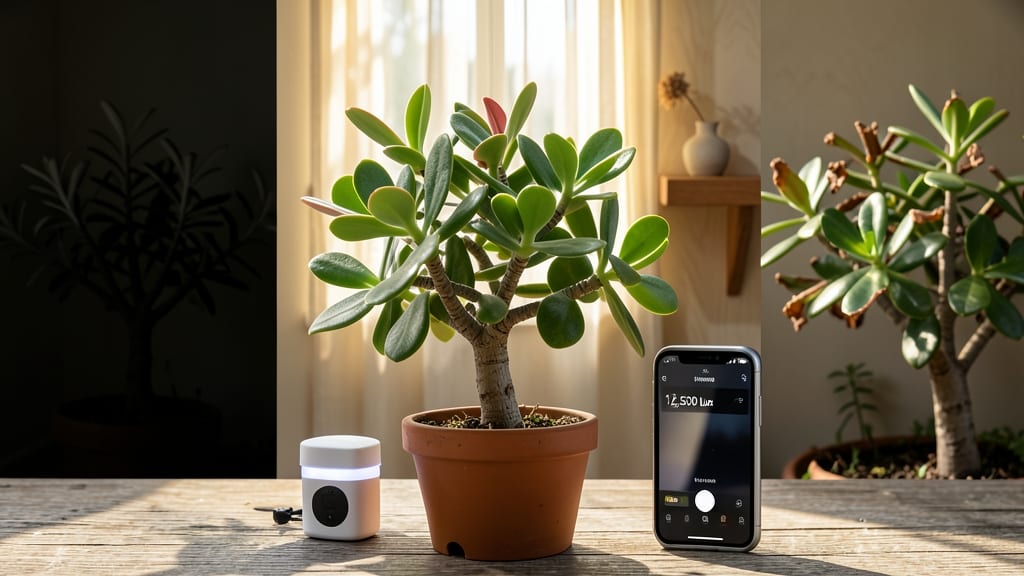
If you’re wondering how much light does a jade plant need, the answer is simple: not enough, and your plant will stretch toward the window like it’s reaching for a high-five—fast-tracking its way to leggy, sad growth.
Jade plants thrive in bright indirect sunlight, but too little makes them stretch, while too much can scorch their leaves. The good news? With just a few simple adjustments, you can create the perfect light conditions, whether you’re growing indoors or outdoors.
Most Jade Plants need 4 to 6 hours of bright, indirect sunlight daily, but they can handle a little direct morning sun without burning. The key is finding that sweet spot where your plant gets enough light to stay compact and vibrant without turning crispy at the edges.
If your Jade Plant looks sad or stretched, it’s time to move it closer to a window—or invest in a grow light if natural light is lacking.
Don’t worry if you’re not sure where to start. I’ll walk you through exactly how to assess your plant’s light needs, spot the warning signs of over- or under-exposure, and even adjust for seasonal changes.
Whether you’re a beginner or a seasoned plant parent, these tips will help your Jade Plant flourish in no time.
The best part? Once you master the light, your Jade Plant will reward you with thick, glossy leaves and that coveted compact shape. Let’s get started—your plant’s future depends on it!

Optimal light requirements for jade plants: bright indirect sunlight explained
If you’ve ever wondered how much light does a jade plant need, you’re not alone. Jade plants (Crassula ovata) thrive in conditions that mimic their native South African habitat—bright indirect sunlight with occasional direct light.
Unlike shade-loving plants, jades crave light intensity, but too much direct sun can scorch their thick, waxy leaves. The key is finding that sweet spot where they get enough light to grow compact and vibrant without burning.
Jade plants are succulents, meaning they store water in their leaves and stems. This adaptation allows them to tolerate drought conditions but also means they need strong light to maintain their health.
In nature, they grow under trees where sunlight filters through leaves, creating the perfect bright indirect light environment. Replicating this indoors or outdoors is essential for their well-being.
Scientifically, jade plants perform photosynthesis most efficiently under blue and red light spectrums, which are abundant in natural sunlight. These wavelengths promote chlorophyll production, leading to lush, green growth. Without enough light, your jade plant will stretch toward the nearest light source—a condition called etiolation—resulting in weak, leggy stems and pale leaves.
Now, let’s clarify the difference between bright indirect sunlight and direct sunlight. Bright indirect light means the sunlight is filtered through a sheer curtain, tree leaves, or diffused by clouds.
Direct sunlight, on the other hand, is unfiltered and can cause sunburn on jade plant leaves, especially during peak afternoon hours when UV rays are strongest.
| Light Requirement | Specification | Notes |
|---|---|---|
| Ideal Light Type | Bright Indirect Sunlight | Filtered through curtains or tree leaves; mimics natural habitat. |
| Direct Sun Tolerance | 2-4 Hours Daily (Morning or Late Afternoon) | Avoid midday sun to prevent leaf burn. |
| Minimum Light Hours | 4-6 Hours of Bright Light | Prevents etiolated (stretched) growth. |
| Light Spectrum Needs | Blue (400-500nm) & Red (620-750nm) | Critical for photosynthesis and chlorophyll production. |
| Signs of Insufficient Light | Etiolated Stems, Pale Leaves | Plant stretches toward light source. |
| Signs of Excess Light | Brown/White Spots, Crispy Edges | Sunburn from unfiltered UV rays. |
One of the most common mistakes I see is placing jade plants in low-light conditions, such as north-facing windows or deep inside a room. In these environments, jade plants become etiolated, meaning their stems stretch out and become weak while their leaves turn pale and sparse.
This happens because the plant is desperately reaching for light, but the quality isn’t sufficient for healthy growth.
On the flip side, exposing your jade plant to direct midday sunlight—especially between 10 AM and 4 PM—can lead to sunburn. You’ll notice this as brown or white patches on the leaves, often starting at the edges.
If left unchecked, these spots can expand, and the leaves may eventually crisp and die. To avoid this, gradually acclimate your jade plant to more light over 1-2 weeks by moving it closer to a window in small increments.
Jade plants are incredibly adaptable, which is why they’re a favorite among beginner gardeners. However, their adaptability has its limits. For instance, while they can tolerate lower light conditions for short periods, prolonged exposure will stunt their growth and weaken their structure.
Similarly, while they can handle brief periods of direct sun, extended exposure will damage their leaves irreparably. The goal is to provide consistent, bright indirect light that mimics their natural environment.
If you’re growing your jade plant indoors, the best spots are near east or west-facing windows, where they’ll receive gentle morning or afternoon sun without the harsh midday rays. A south-facing window is ideal but requires monitoring to ensure the plant doesn’t get too much direct sun.
Outdoors, place your jade plant in a location with partial shade, such as under a patio cover or near a building where sunlight is diffused.
To ensure your jade plant gets the right amount of light, observe it closely over a week. If the leaves are dark green and compact, you’re on the right track. If they’re stretching or turning pale, it needs more light.
Conversely, if you see brown spots or crispy edges, it’s getting too much direct sun. Adjust its position accordingly, and don’t forget to rotate the pot every few weeks to ensure even growth.
Understanding the light requirements for jade plants is the foundation of keeping them healthy and thriving. By providing the right balance of bright indirect sunlight and protecting them from harsh direct light, you’ll enjoy a jade plant that stays compact, vibrant, and full of life for years to come. 🌿
How to adjust your jade plant’s light exposure for perfect growth
First, let’s talk about the best spots for your jade plant indoors. If you have an east- or west-facing window, your plant will love it—these windows provide bright indirect sunlight for most of the day without harsh afternoon rays.
Place your jade plant within 1-2 feet of the glass to ensure it gets enough light, but avoid touching the window, as cold drafts can stress the plant. For south-facing windows, you’ll need to filter the light slightly with a sheer curtain to prevent sunburn on those delicate leaves.
Outdoors, jade plants thrive in partial shade during the hottest summer months. A spot with morning sun (8 AM–12 PM) followed by afternoon shade is ideal, especially in warmer climates.
If you’re in a cooler zone, your jade plant can handle direct sunlight all day, but always introduce it gradually to avoid shock. Watch for signs like yellowing leaves or brown patches—these are red flags that the light is too intense.
⚠️ callout-warning ⚠️
Rotating your jade plant every 4-6 weeks is a game-changer for even growth. Since these plants grow toward the light source, one side often becomes leggy while the other stays compact. Simply turn the pot a quarter turn each time you water. This ensures all sides get equal exposure and keeps your plant symmetrical and bushy. If you notice one side stretching toward the window, it’s a clear sign your plant needs more light—or a rotation to balance its growth.
Seasonal changes mean adjusting your jade plant’s light exposure too. In winter, when natural light is weaker, move your plant closer to the brightest window or supplement with a grow light for 6-8 hours a day.
Conversely, in summer, if your plant starts looking stressed (leaves turning yellow or wilting), provide afternoon shade or move it to a spot with dappled sunlight. Pay attention to your plant’s cues—it’s the best teacher!
If your jade plant develops leggy stems or pale, stretched leaves, it’s begging for more light. Try moving it to a sunnier spot or adding a grow light just 6-12 inches above the plant.
For yellowing leaves, check if the light is too harsh or if the plant is overwatered—both can cause this issue. A quick fix? Trim the leggy stems and repot your jade plant in fresh, well-draining soil to encourage new, healthier growth.
With these simple adjustments, your jade plant will reward you with thick, glossy leaves and that prized compact shape. Remember, the key is observation—watch your plant’s response to light and tweak as needed.
Before you know it, you’ll have a thriving jade plant that’s the envy of every plant lover! 🌿