
Watering
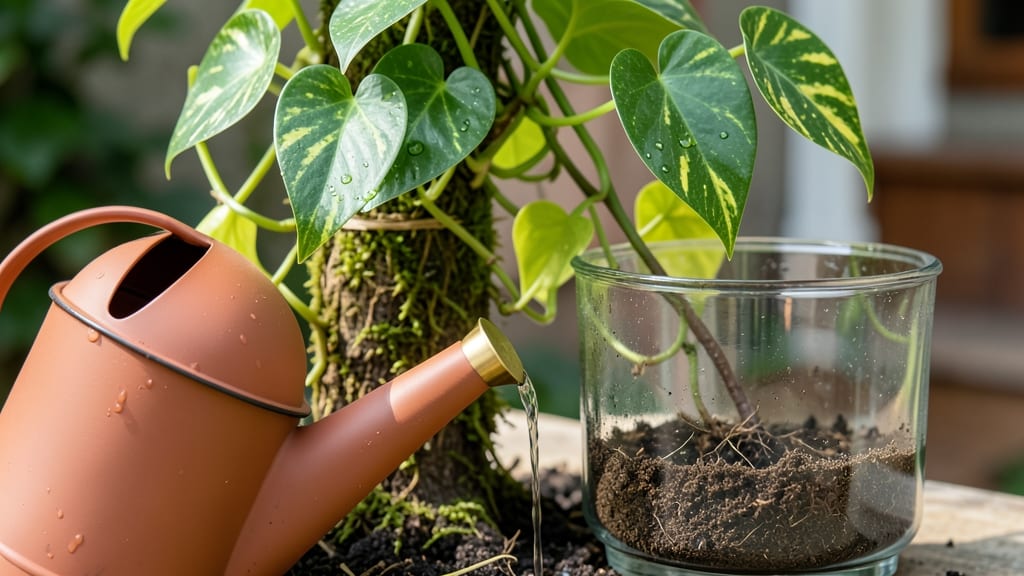
Figuring out how much water a pothos plant needs can feel like solving a mystery—one day it’s thriving, the next its leaves look sad and wilted. The truth? This tough plant actually tells you exactly when it’s thirsty (or drowning), and I’ll show you how to read its signals.
Most people overwater their Pothos by mistake, thinking more moisture equals happier growth. But here’s the game-changer: your plant’s watering schedule should change with the seasons and your home’s conditions.
Whether you’re dealing with dry winter air or humid summer days, I’ll break down the exact frequency and cues to keep those lush vines happy year-round.
Ready to stop guessing? You’ll learn the simple soil test that takes 30 seconds, how to adjust for low light vs. bright spots, and why your Pothos might be begging for help even if the soil feels damp. Let’s get those leaves perking up again—no more second-guessing required.
From the 1-2 week rule to spotting early warning signs, this is your no-fluff guide to watering a Pothos that actually works. Trust me, your plant will thank you with faster growth and fewer brown tips.
Pothos watering schedule by season: how often to water for lush growth
Your pothos plant thrives on consistency, but its water needs shift dramatically with the seasons. During spring and summer, rapid growth demands more frequent hydration, while fall and winter trigger dormancy, requiring you to cut back dramatically.
The key? Understanding your plant's soil moisture and adjusting based on your home's humidity levels and light exposure. Let's break down the science-backed schedule that'll keep those heart-shaped leaves vibrant year-round.
Pothos plants are famously drought-tolerant, but that doesn't mean they're desert survivors. Their roots prefer to stay in a slightly moist (not soggy) environment. The biggest mistake I see? Watering on a strict schedule rather than checking the soil first.
Your pothos will tell you when it's thirsty—drooping leaves or crispy leaf edges are its way of saying "help!" But before you reach for the watering can, always do the finger test.
Here's how to test: Stick your finger about 1-2 inches deep into the soil. If it feels dry at that depth, it's time to water. If it's still damp, wait another 2-3 days. This simple check prevents both overwatering (which causes root rot) and underwatering (which leads to leaf drop). Pro tip: Use your pinky finger—it's the perfect size for most pothos pots!
Now let's talk seasons. Your pothos doesn't follow your calendar—it follows its own internal clock based on light intensity and temperature. During spring and summer, when your plant is in full growth mode, it'll drink water faster.
But in fall and winter, growth slows dramatically, and those same watering habits can drown your plant. The comparison table below shows the exact schedule I follow with my collection of pothos varieties, including the popular Golden Pothos and Marble Queen.
🌿
One critical factor I didn't include in the table? Your home's humidity levels. Pothos plants native to tropical regions love moisture in the air. If your home feels dry (especially in winter with heating), your plant will need water more frequently than the schedule above.
You can increase humidity by placing your pothos on a pebble tray with water or grouping it with other houseplants. A quick test: If condensation forms on cold windows, your humidity is already high!
The type of pot you use also affects watering needs. Terracotta pots dry out faster than ceramic or plastic, so if you're using terracotta, you might need to water 1-2 days earlier than the schedule suggests.
Always check for drainage holes—without them, water sits at the bottom and causes root rot in just 3-5 days. I learned this the hard way with my first pothos!
If you're unsure, stick to pots with holes and use a cache pot (a decorative outer pot) if you prefer a specific look.
Light exposure plays a sneaky role too. A pothos in a bright, indirect window will grow faster and need more water than one in a dim corner. If you notice your plant's growth slowing in what should be peak summer, check its light source.
Move it closer to a window if possible, or supplement with a grow light for 4-6 hours daily
Signs your Pothos is overwatered or underwatered (and how to fix it)
Your Pothos plant communicates thirst and distress through its leaves—if you know what to look for. Yellow leaves and drooping vines are the most common red flags, but they can mean two very different problems. The key difference?
Overwatered plants feel soggy at the roots, while underwatered ones have dry, brittle soil. I’ve helped dozens of plant parents revive their Pothos by spotting these early signs before they become irreversible.
Let’s start with the most critical mistake: overwatering. This is the silent killer of Pothos plants, often disguised as "good care." When roots sit in wet soil for too long, they suffocate and rot. The first visual clue? Yellow leaves that feel mushy to the touch.
If you press a finger into the soil and it’s still damp after a week, your plant is likely drowning—not drinking. The fix starts with a root check and adjusting your watering routine.
⚠️ callout-warning ⚠️
Before watering, stick your finger 1-2 inches into the soil. If it feels damp or cool, wait 3-5 more days. For Pothos, the soil should be dry to the touch before watering again. Pro tip: Use a moisture meter for accuracy—it removes the guesswork entirely.
🌱 Fix for Overwatered Pothos: 1. Remove the plant from its pot and inspect the roots. 2. Trim any black or mushy roots with sterilized scissors. 3. Repot in fresh, well-draining soil and hold off on watering for 5-7 days.
Now, let’s talk underwatering, which often shows up as crispy brown edges on leaves or a plant that feels lightweight when lifted. Unlike overwatering, this is usually an easy fix: simply water deeply until it drains from the bottom.
But here’s the catch—if your Pothos is underwatered for too long, the damage can spread. Look for wrinkled leaves or vines that snap easily. These are clear signals your plant is severely dehydrated.
To revive an underwatered Pothos, give it a thorough soak by placing the pot in a sink of room-temperature water for 10-15 minutes. Let it drain completely before returning it to its saucer.
After this deep drink, resume watering every 7-10 days in summer or 14-21 days in winter. Monitor the soil moisture closely—this plant thrives on consistency, not extremes.
One symptom that confuses even experienced gardeners? Brown tips on leaves. This can happen with both overwatering and underwatering, but the context matters. If the rest of the leaf is healthy and only the tips are crispy, it’s usually low humidity or fluoridated water (use filtered or rainwater instead).
However, if the entire leaf turns brown and wilts, it’s a root rot emergency—act fast with the recovery steps above.
Remember, your Pothos is resilient, but it needs you to listen closely. Pay attention to the weight of the pot (lift it—if it feels light, it’s thirsty) and the color of new growth (vibrant green means happy; pale yellow means stressed).
With these cues, you’ll master the art of watering and watch your Pothos grow into a lush, trailing beauty—no more sad, wilted leaves in sight!