
Companion Plants
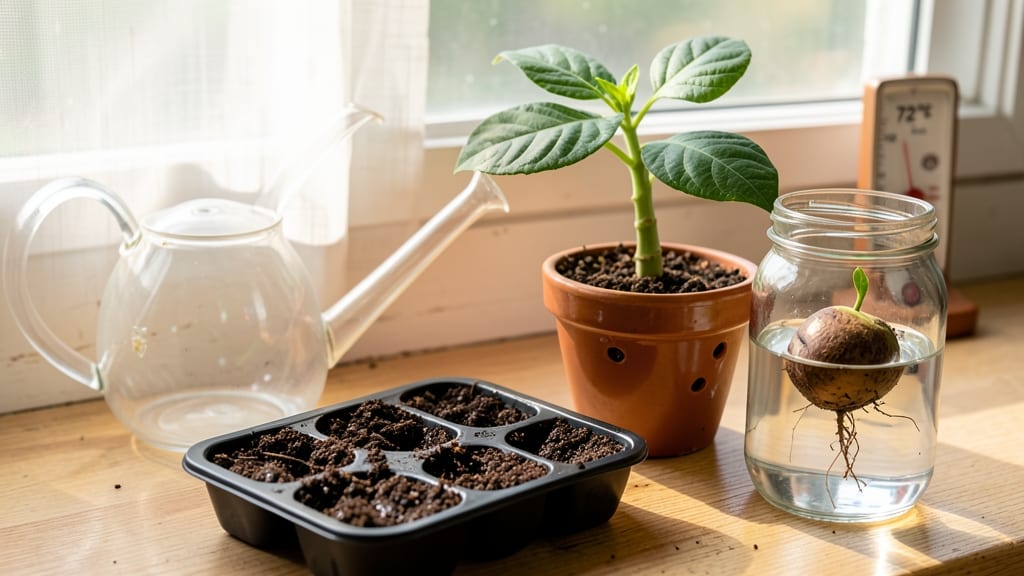
To plant your avocado seed in dirt at the perfect time means the difference between a thriving 🥑 seedling and a sad, rotting pit. Most people rush this step, but patience is key—waiting for the right moment ensures your seedling takes root strong and grows fast.
You’ll know your avocado seed is ready for soil when it develops a 1-inch root system and a sturdy stem with a few leaves. Planting too soon risks drowning the delicate roots, while waiting too long can stunt growth.
The ideal window arrives in late spring, after the last frost has passed in Zone 6 or warmer climates.
Once your seedling hits these milestones, it’s time to transition it to well-draining potting mix. I’ll walk you through the exact steps to plant it 1 inch deep, keep humidity high, and give it the sunlight it craves for fast, healthy growth.
Skip the guesswork—this guide cuts through the confusion so you can confidently move your avocado from water to soil and set it up for success. Let’s get your little tree growing strong!
Best time to plant avocado seed in dirt: germination stages explained
Your avocado seed won’t be ready for soil the moment you rinse off the pit—it needs time to develop the right root system and stem strength. Most seedsling failures happen because people plant too soon, smothering the delicate roots in damp soil.
The key is waiting until your seedling shows 3 clear signs of readiness: a 1-inch root system, a thickened stem, and 2-3 healthy leaves.
Start by placing your seed in water with the pointed end up, changing the water every 2-3 days to prevent mold. Within 2-6 weeks, you’ll see the first root sprouts emerge.
This is when the real waiting game begins—your seedling must grow strong enough to handle soil. Rushing this step often leads to root rot or stunted growth, so patience pays off.
Here’s the critical rule: Never plant your avocado seed in dirt until it has at least 1 inch of roots and a pencil-thick stem. A seedling this size can handle the transition from water to soil without shock.
Smaller roots will struggle to absorb nutrients, while a thinner stem can’t support the plant’s weight once it’s in the ground.
| Germination Stage | Root Length | Stem Thickness | Leaf Count | Ready for Soil? |
|---|---|---|---|---|
| Early Root Sprout | Under ½ inch | Thin, flexible | 0 leaves | ❌ Not ready |
| Root Growth Phase | ½ to 1 inch | Slightly thicker | 1-2 small leaves | ⚠️ Borderline (high risk) |
| Ideal Planting Stage | 1+ inches | Pencil-thick | 2-3 healthy leaves | ✅ Perfect time |
| Advanced Growth | 1.5+ inches | Thick, woody | 4+ leaves | ✅ Still good (but best to plant sooner) |
💡 Pro Tip: Tap the stem gently—if it bends but doesn’t snap, it’s ready for soil.
The best time to plant your avocado seed in dirt aligns with your local climate. In USDA Zone 6 or warmer, aim for late spring after the last frost (typically April-May).
If you’re in a cooler zone, wait until temperatures consistently stay above 60°F (15°C)—cold soil can shock the roots and stunt growth.
Test your seedling’s readiness with this simple 3-step check:
- Root test: Gently remove the seedling from water and measure the roots—if they’re 1 inch or longer, proceed.
- Stem test: Press the stem between your fingers—it should feel firm but flexible, not mushy.
- Leaf test: Look for 2-3 glossy green leaves—yellow or wilted leaves mean it’s not ready.
Once your seedling passes these tests, it’s time to transition to soil. Use a well-draining potting mix (avoid garden soil—it’s too dense) and plant the seedling 1 inch deep, with the roots spread out horizontally.
This mimics natural conditions and encourages strong root development. Water lightly after planting to settle the soil around the roots.
After planting, place your avocado seedling in a bright, indirect light spot for the first 1-2 weeks to reduce transplant shock. Gradually introduce it to direct sunlight over the next week, as too much sun too soon can scorch the delicate leaves.
Keep the soil moist but not soggy—overwatering is the #1 killer of young avocado seedlings.
Remember, the soil transition isn’t the end of the journey—it’s the beginning of your seedling’s life as a tree. With the right timing and care, your avocado seedling will grow into a healthy plant that could one day produce fruit.
The key is watching for those 3 readiness signs and acting when the moment is right.
If you rush the process, you’ll likely end up with a seedling that struggles to thrive. But if you wait for the perfect moment—when roots are strong, the stem is sturdy, and leaves are vibrant—you’ll set your avocado seedling up for lifelong success. 🌱
Step-by-step guide: transplanting avocado seed into soil for fast growth
Now that your avocado seed has sprouted roots and a 1-inch stem, it’s ready for its next big step: moving into soil. This transition is critical—do it right, and your seedling will thrive; rush it, and you risk root shock or fungal issues.
The key is preparing the perfect well-draining mix and handling the seedling with care to encourage fast, healthy growth.
Before you begin, gather your supplies: a 6-inch pot, cactus or seedling mix, a spray bottle for humidity, and a sunny windowsill or grow light. I recommend using a pot with drainage holes to prevent waterlogging, which can drown your delicate roots.
If you’re planting outdoors, wait until temperatures stay above 60°F (15°C) consistently.
After planting, place your pot in a bright, indirect light spot for the first week to help it adjust. Avocado seedlings need 6+ hours of sunlight daily, but too much direct sun too soon can scorch young leaves.
Gradually increase sunlight exposure over 7–10 days to harden off the seedling.
Humidity is your secret weapon for fast growth. Cover the pot with a plastic bag or use a humidity dome to maintain 70% humidity around the seedling. Mist the leaves daily to mimic tropical conditions—avocados love moisture! Once new growth appears (usually in 2–4 weeks), you can remove the cover.
Monitor your seedling closely for signs of stress, like yellowing leaves or wilting. These often signal overwatering or poor drainage. If you notice issues, adjust your care routine immediately.
With the right soil, light, and humidity, your avocado seedling will grow 1–2 inches per month and soon be ready for a larger pot.