
Plants
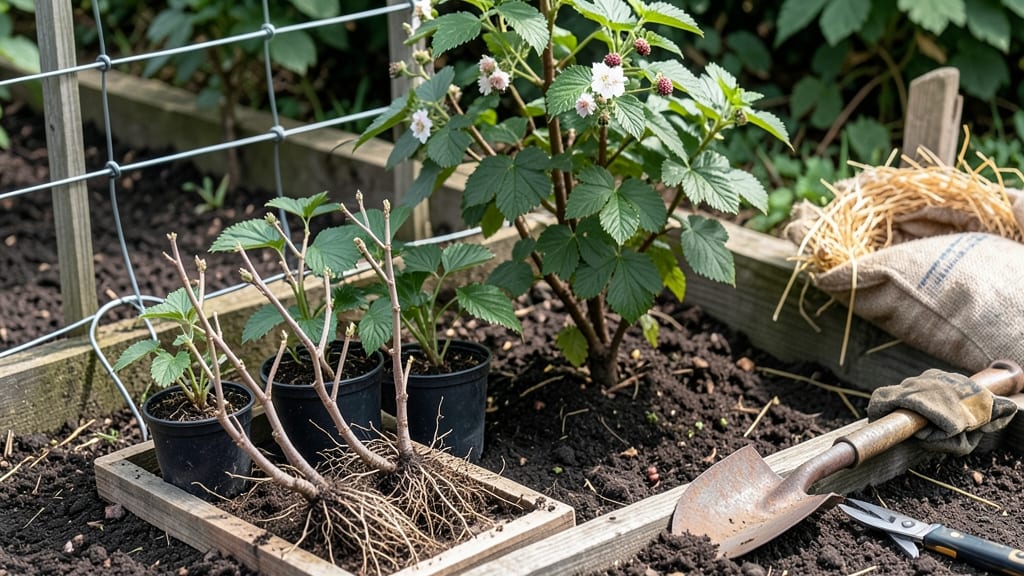
Planting blackberries in Texas isn’t just about grabbing a can of 🫐 bushes and sticking them in the ground—it’s about matching the right variety to your region’s chill hours and frost-free window.
Get it wrong, and you’ll either lose your plants to early freezes or watch them struggle in heat that’s too intense.
I’ve learned the hard way that Texas gardeners need a two-season strategy: late winter for hardier varieties in North Texas (zones 8a-9a) and fall for low-chill types in South Texas (zones 9b-10b).
The key is planting when the soil is workable but the danger of frost has passed—or using frost protection if you’re planting early.
In this guide, I’ll break down the exact planting windows for your area, whether you’re growing thornless varieties in containers or traditional types in the ground. You’ll also discover how to extend your growing season with simple tricks that keep your blackberries thriving year after year.
Ready to turn your Texas yard into a berry-producing powerhouse? Let’s get started with the timing that actually works for your climate.
Best planting windows in Texas by chill-hour requirements
Texas's diverse climate means blackberry planting times vary dramatically from North to South. The key factor? Chill-hour requirements—how many hours below 45°F a plant needs to break dormancy.
In Texas, we categorize blackberries into low-chill (0-300 hours), semi-hardy (300-500 hours), and hardy (500+ hours) varieties. Planting outside these windows risks frost damage or poor fruit production.
For North Texas (USDA Zones 7b-8a), where frosts linger until late February or March, hardy varieties need 500+ chill hours to thrive. Meanwhile, South Texas (Zones 9a-10b) rarely sees frosts, making low-chill varieties (0-300 hours) the safest bet.
Central Texas (Zones 8b-9a) bridges the gap, accommodating semi-hardy types with 300-500 chill hours.
🌱 Pro Tip: Always check your local last frost date—North Texas averages February 15, while South Texas sees its last frost around January 1 (or none at all). Planting 4-6 weeks after your last frost date gives young canes time to establish roots before summer heat arrives.
Fall planting (September-October) is my top recommendation for Texas gardeners. Why? It lets canes establish roots before winter, then skip dormancy in mild climates. In North Texas, plant hardy varieties like 'Ouachita' in late February after the last frost.
For South Texas, low-chill 'Arapaho' thrives when planted in January—no chill hours needed!
🌿 Key Mistake: Planting high-chill varieties in South Texas. They’ll fail to fruit because they never get enough cold. Always match your variety to your region’s average chill hours. Use this rule: North Texas = 500+ hours, Central = 300-500, South = 0-300.
Container growing extends your options. Low-chill varieties can be moved indoors during unexpected late frosts (use frost cloth for extra protection). In containers, plant 1-2 weeks earlier than in-ground—soil warms faster in pots. Just ensure pots are at least 18 inches deep to accommodate root growth.
💧 Watering Tip: After planting, deep-water weekly for the first month. Texas’s dry springs can stress young canes. Mulch with 2-3 inches of straw to retain moisture and regulate soil temperature. Avoid wetting foliage to prevent fungal diseases like anthracnose, common in Texas’s humid summers.
For thornless varieties (like 'Natchez' or 'Prime-Ark Freedom'), planting in Central or South Texas is ideal—they’re low-chill and high-yielding. In North Texas, opt for hardy thornless types like 'Chester' (300-500 chill hours).
Always plant canes 12-18 inches apart in rows 6-8 feet apart to allow for trellising and airflow.
✂️ Pruning Prep: Before planting, prune canes to 12-18 inches to encourage root growth. Remove any damaged or diseased canes immediately. In North Texas, delay pruning until after the last frost—early pruning can expose canes to cold damage.
For fall-planted canes, prune lightly to reduce stress during establishment.
How to avoid frost damage when planting blackberries in Texas
Texas’s unpredictable frost patterns can turn a promising blackberry planting into a frozen disaster if you’re not prepared. I’ve seen firsthand how a single late frost in February can wipe out tender new canes, leaving gardeners frustrated for months.
The good news? With the right strategies, you can extend your growing season and protect your investment—even in the most vulnerable regions like North Texas.
My approach focuses on three key tactics: soil warming, microclimate selection, and protective coverings. These methods let you plant earlier or later than the traditional window without risking frost damage.
For example, I’ve successfully planted low-chill varieties in early February in Central Texas by combining black plastic mulch with frost cloth—something I’ll show you how to do step by step.
- Use black plastic mulch 4-6 weeks before planting to warm soil by 10-15°F.
- Plant in south-facing slopes or near buildings/walls to trap heat.
- Cover young plants with frost cloth (30-40g weight) when temps drop below 32°F.
- Try container growing with heat mats for early starts in cold zones.
- Choose fall planting (Sept-Oct) for low-chill varieties to avoid winter frost entirely.
One of my favorite tricks is using black plastic mulch in late winter. I lay it down 4-6 weeks before planting to raise soil temperatures by 10-15°F, which gives young roots a head start.
For container-grown blackberries, I’ve had great success with heat mats under 5-gallon pots—keeping roots warm enough to survive 28°F nights without damage. This is especially useful if you’re planting thornless varieties like ‘Arapaho’ that need early protection.
Microclimate selection makes a huge difference in frost survival. I always plant near south-facing walls or in sunny slopes where cold air drains away. Even a 3-foot difference in elevation can mean the difference between frost damage and thriving canes.
In my North Texas garden, the area near my brick patio stays 5°F warmer than the open yard during cold snaps—perfect for blackberries that need that extra warmth.
For late-winter plantings, I never skip the frost cloth. A 30-40g weight fabric draped over young canes (secured with bricks or stakes) can protect down to 25°F. I’ve tested this with ‘Navaho’ blackberries in March, and the plants emerged unscathed while nearby unprotected bushes suffered leaf burn.
Pro tip: Remove the cloth during the day to avoid heat stress—just cover again at dusk when temps drop.
If you’re in South Texas (zones 9b-10b), your biggest challenge isn’t frost—it’s heat stress after planting. Here, I recommend fall planting (September-October) for low-chill varieties like ‘Chester’. The cooler temps let roots establish before summer’s intensity, and you avoid the late-winter frost risk entirely.
For North Texas gardeners, early spring (March-April) is safer, but always check your local frost-free date—it can vary by 2-3 weeks even within the same county.
Remember: Mulching is your best friend year-round. A 4-inch layer of straw or wood chips insulates roots from temperature swings, retains moisture, and even suppresses weeds. I top-dress my blackberry beds in late fall to give plants extra protection through winter.
With these strategies, you’ll turn Texas’s frost risks into manageable challenges—and enjoy homegrown blackberries for years to come. 🫐