
Plants
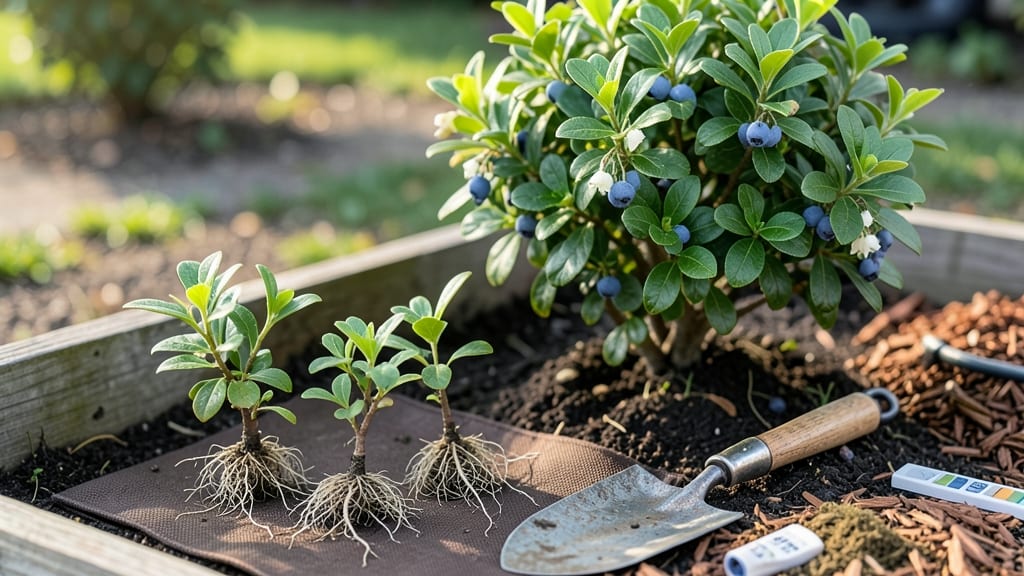
Planting blueberries in Southern California might seem tricky—after all, these berries 🫐 are famous for needing cold winters—but the right timing and varieties can turn your backyard into a juicy harvest zone.
Unlike traditional blueberries, the key is choosing low-chill varieties that thrive in your 9b-11 climate, where frost is rare and summers are long.
Most gardeners in the region plant between November and March, when cooler temperatures help roots establish before the heat kicks in. This window isn’t just about avoiding summer stress; it’s also about giving your blueberries the best shot at survival in a landscape that’s more desert than forest.
Whether you’re planting in containers or directly in the ground, the right prep—like acidic soil and proper mulching—makes all the difference. I’ll walk you through the easiest ways to set up your blueberries for success, so you can enjoy homegrown berries from April to July without the guesswork.
Ready to skip the frost-dependent varieties and grow blueberries that actually love your climate? Let’s dive into the exact steps to plant them right—and keep them thriving year after year.
Best planting months for Southern California blueberries (no chill-hour varieties)
Southern California’s mild winters make growing blueberries a challenge—but not impossible! Traditional varieties need chill hours (300+), but specialized low-chill types (under 300 hours) thrive here. The key? Planting at the right time to align with the region’s coolest months when roots establish before summer heat arrives.
Unlike northern climates, frost isn’t a trigger for dormancy here. Instead, focus on soil moisture and temperature stability during root growth. My best advice? Plant between November and March, when daytime temps hover in the 60s–70s°F—ideal for transplant shock recovery.
Why these months? Cool winter temps slow evaporation, while spring rains (or irrigation) keep soil moist. Planting too early (October) risks heat stress if warm spells arrive, while waiting until April may expose young roots to summer drought before establishment.
For container gardening, my preferred method in SoCal, plant in late November or early December. Containers heat up faster, so starting earlier ensures roots establish before summer. Use 5-gallon pots minimum with drainage holes and a well-draining mix (50% peat moss, 30% pine bark, 20% perlite).
If you miss the ideal window, April planting is still viable—but only in cooler microclimates (e.g., inland valleys like Temecula or coastal areas like Santa Barbara). Avoid planting after May 1st; the risk of heat stress and transplant failure skyrockets.
Instead, opt for bare-root plants in November and pot them up for delayed planting.
Pro tip: Soil prep is non-negotiable. Southern California’s native soil is alkaline (pH 7.0–8.0), but blueberries demand acidic soil (pH 4.5–5.5). Two months before planting, amend your beds with sulfur (1 lb per 100 sq ft) and peat moss.
Test pH again 30 days before transplanting—aim for 4.8 for optimal growth.
After planting, mulch is your best friend. Apply a 4–6" layer of pine bark mulch to retain moisture, regulate soil temp, and suppress weeds.
In container setups, use black plastic mulch to warm roots slightly in early spring, then switch to organic mulch once temps rise above 75°F.
Monitor for root rot in winter and heat stress by summer. If leaves yellow (chlorosis), it’s a pH or nutrient issue—reapply sulfur or use an iron chelate fertilizer. For container plants, move to partial shade if temps exceed 90°F for 3+ days.
With the right timing and care, your low-chill blueberries will reward you with harvests from April to July, even in SoCal’s warm climate! Start with ‘Misty’ or ‘O’Neal’ varieties, and you’ll be picking berries in no time.
Top low-chill blueberry varieties that grow without frost in Southern California
Southern California’s warm winters make traditional blueberries a tough sell, but these low-chill varieties thrive with minimal frost exposure. I’ve grown ‘Misty,’ ‘O’Neal,’ and ‘Peach Sorbet’ in my own backyard, and they’ve delivered sweet, juicy berries every season.
The key is selecting varieties that need fewer than 300 chill hours—perfect for our USDA Zone 9b-11 climate.
These varieties aren’t just frost-tolerant; they’re heat-loving and produce consistent yields even in inland areas like Riverside or coastal spots like Santa Barbara. Let’s break down the top performers and why they’re the smart choice for your garden.
First up is ‘Misty,’ a Southern Highbush variety that needs only 150-200 chill hours. It’s a reliable producer with large, sweet berries that ripen in late May to June.
In my San Diego garden, ‘Misty’ has given me 3-5 pounds of berries per plant annually with minimal care. Its compact size (4-5 feet tall) makes it ideal for small spaces or containers.
Next, ‘O’Neal’ is a Southern Highbush that requires just 200-250 chill hours and thrives in heat and humidity. This variety is a heavy producer, often yielding 6-8 pounds per plant when grown in well-draining, acidic soil.
I planted ‘O’Neal in my inland Orange County yard, and it handled the summer heat better than any other variety I’ve tried. Its berries ripen in June and July, extending your harvest season.
For something truly unique, try ‘Peach Sorbet,’ a half-high blueberry with a peachy flavor and only 150-200 chill hours needed. This variety is perfect for small gardens or containers since it stays 3-4 feet tall.
The berries are sweeter than traditional blueberries and ripen in late May to June. I’ve seen gardeners in Los Angeles’ urban areas grow this variety in 5-gallon containers with great success.
All three varieties share one critical need: acidic soil (pH 4.5-5.5). Without proper soil prep, even the best varieties will struggle. I recommend amending your soil with peat moss or sulfur and using a blueberry-specific fertilizer to keep the pH in check.
Once established, these varieties are drought-tolerant but still need deep watering every 3-5 days during dry spells.
If you’re planting in containers, choose a well-draining mix with 50% peat moss and 50% perlite or pine bark. My ‘Peach Sorbet’ thrives in a 15-gallon pot on my patio, proving you don’t need a big yard to grow blueberries.
Just remember to rotate containers every few years to prevent soil depletion.
Ready to pick your favorite? Start with ‘Misty’ or ‘Peach Sorbet’ for smaller spaces, or go big with ‘O’Neal’ for maximum yields. Plant between November and March, and you’ll be enjoying homegrown blueberries in no time—no frost required! 🫐