
Plants
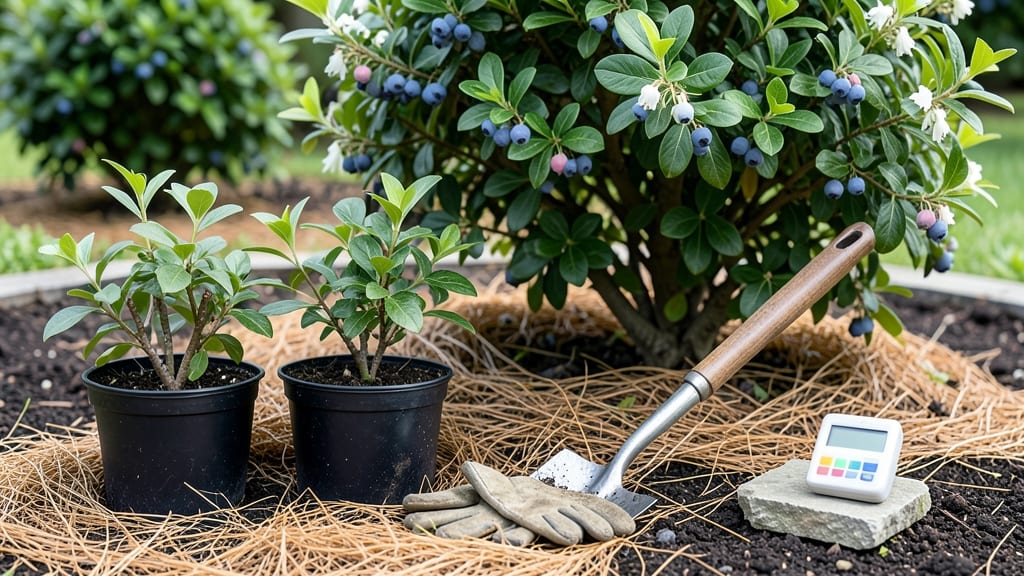
Planting your 🫐 Blueberry Bush at the wrong time in Michigan could mean the difference between a bountiful harvest and years of disappointment. Whether you're in the Upper Peninsula or the Lower Peninsula, getting the timing right—especially with chill-hour needs and frost risks—is the key to success.
Michigan’s 5b-6b zones create unique challenges, from early spring frosts to late fall freezes. You’ll want to plant either in early spring (April) or early fall (September-October), but the exact timing depends on your location and the variety you choose. Let’s break down the best approach for your specific area.
Many gardeners make the mistake of planting too early, risking frost damage to delicate roots, or too late, leaving plants vulnerable before winter. I’ll show you how to avoid these pitfalls and give your 🫐 Blueberry Bush the best possible start for a thriving, productive shrub.
Ready to get started? By the end of this guide, you’ll know exactly when to plant, how to prepare your soil, and which varieties thrive best in Michigan’s climate. Let’s make sure your blueberries get off to the right start!
Michigan’s blueberry planting Zones: chill-hours vs. frost-free dates
Michigan’s climate creates unique challenges—and opportunities—for growing blueberry bushes. The Lower Peninsula (Zones 5-6) enjoys milder winters than the Upper Peninsula (Zones 4-5), but both require precise timing to avoid frost damage. The key?
Understanding chill-hours (the number of hours below 45°F needed for dormancy) and your frost-free dates. Plant too early, and late frosts will stunt growth; too late, and roots won’t establish before winter.
Northern Michigan’s harsh winters (Zones 4-5) demand varieties like 'Patriot' or 'Jersey', which thrive with 800-900 chill-hours. Southern Michigan’s milder climate (Zones 5-6) suits 'Bluecrop' or 'Duke', needing only 400-600 chill-hours.
Choosing the wrong variety can mean no fruit—or even plant death—so match your USDA zone to the right bush.
Here’s how to align your planting with Michigan’s climate quirks, including frost-free windows and chill-hour requirements for each region:
For Northern Michigan, fall planting is critical—roots establish before winter, and chill-hours are naturally met. Aim for 6–8 weeks before first frost (typically by October 15). In Southern Michigan, you have flexibility: plant in early spring (after last frost) or early fall (before soil freezes).
Spring planting lets roots grow before summer heat, while fall planting avoids summer drought stress.
Your frost-free dates are your planting guideposts. In Zone 5-6, last frosts hit April 15–May 1, so spring planting should wait until then. In Zone 4-5, first frosts arrive October 10–November 1, so fall planting must finish by mid-October.
Use Michigan State University’s frost maps to pinpoint your exact window—even a 10-day difference can mean the difference between success and failure.
Don’t overlook container gardening if your yard’s soil is too alkaline (Michigan’s limestone-rich soil often needs pH 4.5–5.5 amendments). Containers let you control soil acidity and move plants to microclimates with longer frost-free seasons. Just ensure pots have drainage holes and use a well-draining, acidic mix.
Pro tip: If you’re in Zone 5-6 and planting in spring, choose early-season varieties like 'Earliblue' to avoid late May frosts. In Zone 4-5, opt for late-season varieties like 'Northland' to maximize fruit set before winter.
Always check the chill-hour range on your plant tag—it’s non-negotiable for flowering and fruiting.
One common mistake? Assuming all blueberry bushes thrive in Michigan. 'Southern Highbush' varieties (e.g., 'Rabbiteye') won’t survive UP winters—they need only 200–300 chill-hours. Stick to northern-adapted varieties to avoid disappointment.
And remember: mulch heavily (2–3 inches of pine needles or wood chips) to insulate roots in winter and retain moisture in summer.
Timing your blueberry planting isn’t just about the calendar—it’s about balancing chill-hours, frost risk, and soil conditions. With Michigan’s variable climate, a little research now saves headaches later. Plant at the right time, and you’ll enjoy years of bountiful harvests—not just a few berries.
Step-by-step planting timeline: early spring vs. fall strategies
Michigan’s variable climate means your blueberry bushes need precise timing to thrive. Planting too early risks frost damage, while waiting too late can stunt root growth. For southern Michigan (Zones 5-6), early spring (April–May) works best, while northern areas (Zones 4-5) benefit from fall planting (September–October).
Both approaches ensure your plants establish roots before extreme temperatures.
I’ve planted blueberries across Michigan’s zones and learned the hard way—skipping soil prep or ignoring frost dates leads to weak plants. The key is aligning your planting with your last frost date and the bushes’ chill-hour requirements. Let’s break this down into actionable steps tailored to your region.
📅 Step-by-Step Planting Guide for Michigan Blueberries
-
Step 1: Verify Last Frost Date
Use Michigan State University’s frost maps to confirm your last frost date. Southern Michigan averages mid-April, while northern areas may see frost into May. Plant 2–4 weeks after this date for spring.
-
Step 2: Test and Adjust Soil pH
Blueberries demand acidic soil (pH 4.5–5.5). Test your soil with a kit—if it’s higher, amend with elemental sulfur (apply 2–3 months before planting). Michigan’s native soil is often alkaline, so don’t skip this!
-
Step 3: Prepare Bare-Root Plants
Soak bare-root blueberries in water for 2–4 hours before planting. This hydrates roots and reduces transplant shock. For container-grown plants, water thoroughly 1 day prior to planting.
-
Step 4: Plant in Well-Draining Soil
Dig a hole twice as wide as the root ball but no deeper. Mix peat moss or compost into native soil for drainage. Place the plant so the root crown sits 1–2 inches above soil level to prevent rot.
-
Step 5: Mulch and Water Deeply
Add 2–3 inches of organic mulch (pine needles or wood chips) to retain moisture and acidify soil. Water deeply immediately after planting, then provide 1–2 inches of water weekly (more in summer).
Pro Tip: For fall planting (ideal in northern Michigan), aim for 6–8 weeks before first frost (typically September). This gives roots time to establish before winter dormancy.
If you’re in southern Michigan (Zones 5-6), early spring planting (April–May) gives your blueberries a full growing season to establish roots before summer heat. However, northern Michigan gardeners (Zones 4-5) should opt for fall planting (September) to avoid spring frost risks and give plants a head start.
One mistake I see often is planting too early—even if the ground looks thawed, cold soil can suffocate roots. Always wait until the soil is at least 50°F at a 4-inch depth. For fall planting, avoid planting too close to winter; aim to finish by mid-October in most of Michigan.
Remember, well-draining soil and full sun exposure are non-negotiable. Blueberries are finicky but reward patience with years of delicious harvests. Follow these steps, and your bushes will thank you with vibrant growth and plump berries by next summer! 🫐