
Trees
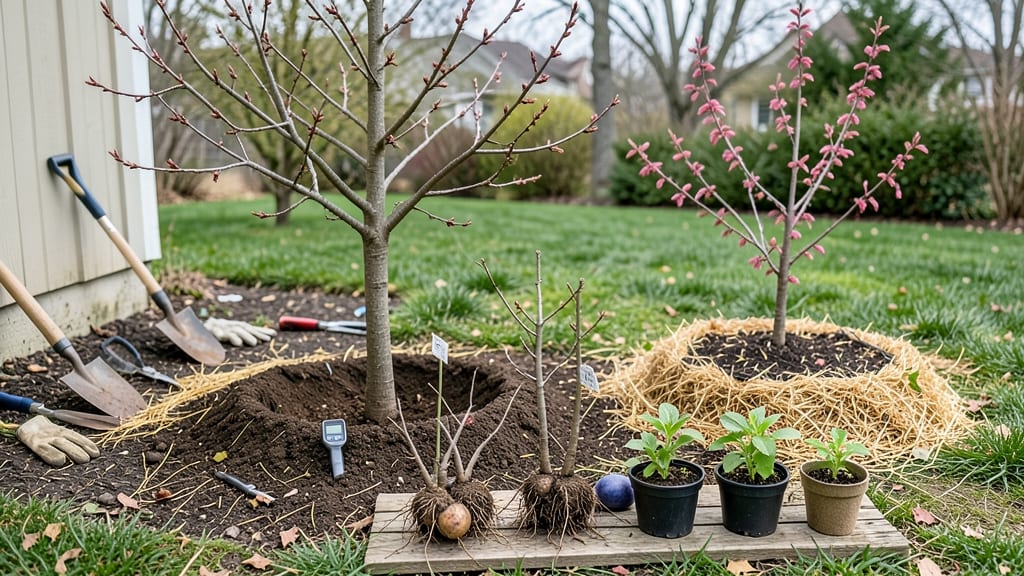
Planting a fruit tree 🍎 in Wisconsin isn’t just about picking a month—it’s about timing the root establishment to outsmart frost, soil, and even deer. Get it wrong, and you’re staring at a sad, stunted sapling by summer.
But nail the fall or early spring window, and you’ll set up your tree for years of Wisconsin-grown apples, peaches, and cherries.
Most gardeners assume spring is the only option, but fall planting actually gives roots a head start in cooler soil—just don’t wait past October 15 when frost sneaks in.
Whether you’re in Zone 4a or 6b, the soil temperature and last-frost dates (around April 15) dictate the difference between thriving and struggling trees.
I’ve dug into the science behind Wisconsin’s short growing season and talked to local extension experts to break down the exact planting timeline for varieties like Honeycrisp apples or Montmorency cherries. Spoiler: bare-root trees need different care than container-grown ones, and your soil’s pH could be silently sabotaging your success.
Ready to plant with confidence? We’ll cover soil prep, frost-proofing tips, and the critical mistakes that derail even the best-intentioned orchards. Let’s get those roots growing the right way.
Best planting months for fruit trees in Wisconsin by variety
Wisconsin’s USDA Zones 4-5 demand careful timing for fruit tree planting, where soil temperature and dormancy cycles dictate success. Planting outside these windows risks frost heave or stunted root growth.
Southern Wisconsin (Zone 5) has slightly longer windows than northern areas (Zone 4), but both require early spring or late fall planting for best results.
Bare-root trees thrive when planted in early spring (March-April) before buds swell, while container-grown trees can handle fall planting (September-October) as long as roots establish before frost. Each fruit variety has unique needs—apples and pears prefer fall planting, while peaches and plums tolerate early spring better.
For northern Wisconsin (Zone 4), prioritize early spring planting (March-April) to avoid late frosts. The soil temperature must stay above 40°F (4°C) for 2+ weeks before planting.
Use black plastic mulch to warm soil faster if needed. Southern Wisconsin gardeners have more flexibility, with fall planting extending into early November.
Container-grown trees offer flexibility—plant them in early fall (September) so roots establish before winter. Amend planting holes with compost and sand (1:1 ratio) to improve drainage in Wisconsin’s clay-heavy soils. Water deeply immediately after planting to eliminate air pockets.
Peaches and nectarines are the most frost-sensitive varieties, requiring microclimate protection like windbreaks or south-facing slopes. In Zone 4, choose cold-hardy varieties like 'Honeycrisp' apples or 'Montmorency' cherries, which tolerate -25°F (-32°C) temperatures. Always check the chilling hour requirements—most Wisconsin varieties need 800-1,200 hours below 45°F (7°C).
After planting, apply 3-4 inches of mulch (straw or wood chips) to insulate roots. In Zone 5, you can push fall planting to November 1, but avoid planting after the first hard frost (typically October 15 in northern WI).
Use a soil thermometer to monitor temperatures—roots need 4-6 weeks to establish before winter.
Pro tip: Bare-root trees should have 3-4 months to establish roots before winter. If planting in late fall, use tree wraps and anti-desiccant sprays to protect against winter burn. Container-grown trees planted in September can handle Wisconsin’s first frost better due to established root balls.
Regional adjustments matter—southern Wisconsin (Zone 5) can plant peaches in early fall, while northern areas (Zone 4) must wait until spring. Always check your local frost dates (available via Wisconsin State Climatology Office) and adjust planting by 2-3 weeks if your microclimate runs colder.
Remember: Root growth stops below 40°F (4°C), so planting too late risks frost heave. For container-grown trees, remove the pot and score the root ball to encourage outward growth. This is especially critical in Wisconsin’s heavy clay soils, where poor drainage can suffocate roots.
How to prepare Wisconsin soil and site for fall vs. spring planting
Wisconsin’s clay-heavy soils and unpredictable frost dates make soil prep the foundation of success for fruit trees. Whether you plant in fall or spring, the right amendments and site selection can mean the difference between a tree that thrives and one that struggles.
I’ve learned that fall planting gives roots a head start in cooler soil, while spring planting avoids winter stress—but timing is everything.
Start by testing your soil’s pH and drainage. Most Wisconsin fruit trees prefer a slightly acidic pH of 6.0-7.0, and poor drainage is a silent killer. If your yard sits in a low spot or has compacted clay, consider raised beds or mounded soil to prevent root rot.
I’ve seen too many trees fail because of soggy roots, so don’t skip this step.
Fall planting (September-October) is ideal for container-grown trees, as roots establish before winter dormancy. But avoid planting after October 15, when frost can damage tender roots. For spring planting, wait until after the last frost (around April 15) and when soil temps reach 45°F—any earlier risks frost heave.
🌱 Fall Planting vs. Spring Planting
| Factor | Fall Planting | Spring Planting |
|---|---|---|
| Best Time | September-October | April-May (after frost) |
| Root Growth | Establishes before winter | Grows with above-ground growth |
| Soil Temp | Cooler (45-55°F) | Warmer (50-65°F) |
| Watering Needs | Moderate (cooler temps) | Higher (active growth) |
| Risk | Late frost damage | Frost heave if planted too early |
For clay soil, mix in compost and sand (1/3 each) to improve drainage. I’ve had great results with gypsum to break up compaction, especially in heavy clay areas.
If your site is windy, plant on the leeward side of a fence or use a windbreak like evergreen shrubs to protect young trees from winter desiccation.
Mulch heavily with wood chips or straw (3-4 inches deep) to retain moisture and regulate soil temperature. Just keep mulch 6 inches away from the trunk to avoid rot. And remember: deer and voles love young trees, so use tree guards or fencing until the tree is established.
Finally, avoid planting in wet springs or late fall—roots need time to harden off before winter. If you’re unsure, consult your local UW Extension office for soil tests and microclimate advice tailored to your county.
With the right prep, your fruit trees will grow strong enough to handle Wisconsin’s wild swings.