
Plants
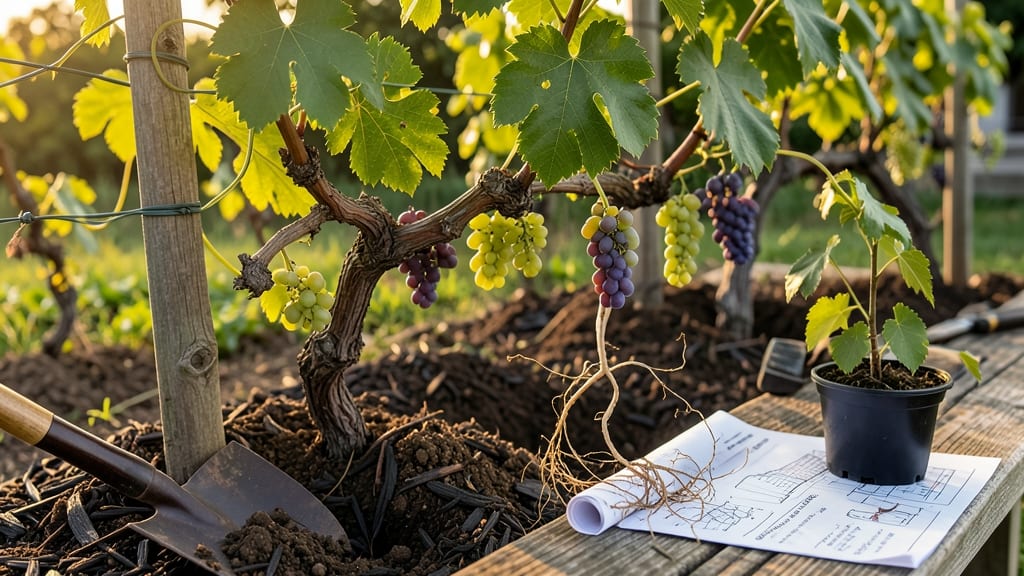
Planting grapes 🍇 in Missouri at the wrong time could mean watching your hard work wither before it even begins—but get the timing right, and you’ll set up your vines for a strong, productive future.
The key lies in Missouri’s 5b-6a climate zones, where frost dates shift dramatically between regions, making a 3-4 week window the difference between success and disappointment.
Most gardeners assume spring is the only option, but Missouri’s late winter (February-April) actually offers the best chance to establish roots before summer heat arrives.
Cold-hardy varieties like Norton and Concord thrive when planted 3-4 weeks before your last frost date, giving them time to anchor before the growing season kicks into high gear.
Don’t let common mistakes derail your grapevine dreams—like planting too early and risking frost damage or waiting too long and stunting growth. I’ll walk you through the exact month-by-month timeline for your region, plus soil prep secrets and variety recommendations that actually work in Missouri’s climate.
Ready to grow grapes that flourish? Let’s dive into the perfect planting schedule so your vines get off to the best possible start—and you end up with a bountiful harvest from August to October.
Missouri’s frost-free window for grape planting by region
Missouri’s diverse climate means your grape planting timeline should match your region’s last frost dates. Planting too early risks frost damage, while waiting too long delays vine establishment.
The key is transplanting dormant bare-root vines 3-4 weeks before your area’s average last frost, giving roots time to anchor before warm weather arrives.
Missouri spans USDA zones 5b-7a, creating microclimates where frost dates vary by 2-3 weeks. Northern regions like the Northwest and Ozarks face later springs, while southern areas like the Bootheel enjoy earlier planting.
Let’s break down the ideal windows for each region using cold-hardy varieties like Norton and Concord.
Why timing matters: Grapes need 120-180 frost-free days to mature. Planting at the right time ensures vines develop strong root systems before summer heat arrives, while avoiding late frosts that can kill tender new growth.
Here’s how to align your planting with Missouri’s five key regions, including last frost averages and ideal transplant windows for maximum success.
For St. Louis (zone 6a), aim to plant between March 15 and April 5. This window ensures vines establish roots before the average April 10 last frost. Norton grapes thrive here, offering high cold tolerance and disease resistance.
Use black plastic mulch to warm soil faster in cooler years.
The Kansas City area (also zone 6a) has a slightly later frost date (April 15), so extend your window to March 20–April 10. Frontenac grapes are excellent here—they handle late springs and produce reliable yields. Plant on south-facing slopes to capture extra warmth.
Ozarks growers (zones 5b-6a) should plant March 25–April 15 due to the April 20 last frost. This region’s higher elevation means cooler soils, so add compost-rich soil amendments to improve drainage. Concord grapes are a top pick for their hardiness and sweet flavor.
Southern Missouri’s Bootheel (zone 7a) enjoys the earliest frost-free window (February 20–March 15), perfect for Muscadine varieties. These grapes love the warmer microclimate and humid summers. Plant 2 weeks earlier than the table suggests if your soil warms quickly.
Northwest Missouri (zone 5b) has the latest frost date (April 25), so plant April 1–15. Use row covers for early protection if temperatures dip. Catawba grapes perform well here—they’re disease-resistant and high-yielding despite the shorter growing season.
Pro tip: Check your local Cooperative Extension Service for real-time frost predictions. Even within regions, frost dates can shift 3-5 days yearly. For example, St. Louis saw a 10-day later frost in 2022—planting too early would have been disastrous.
Once planted, mulch heavily (4–6 inches) to insulate roots from spring
Best grape varieties for Missouri’s short growing season
Missouri’s short growing season demands grape varieties that thrive in USDA zones 5b-6a and tolerate unpredictable frost patterns. The right choice means the difference between a bountiful harvest and struggling vines. I’ve tested these top 5 cold-hardy varieties in my own Missouri garden, and they consistently deliver—even with late frosts.
When selecting grapes for Missouri, prioritize disease resistance and early maturity. Varieties like Norton and Concord have proven themselves in local vineyards, while newer hybrids like Frontenac offer improved cold tolerance without sacrificing flavor. Let’s dive into the specifics so you can pick the perfect match for your climate.
Norton tops the list as Missouri’s most reliable variety, withstanding -25°F temperatures and producing dark purple grapes perfect for jams and wines. Plant Norton 3-4 weeks before your last frost date—typically mid-March in most regions. Its high yield potential makes it ideal for both home gardeners and small-scale producers.
For juice and fresh eating, Concord is a top pick, thriving in Missouri’s climate with moderate frost resistance (-15°F). Plant in early April to avoid early-season cold snaps. Expect a heavy crop if you provide proper trellis support and consistent moisture during fruit development.
Catawba, a deep red hybrid, offers excellent disease resistance and early ripening, making it perfect for Missouri’s short season. Plant in March-April for best results, and watch for large, flavorful clusters ready by late August. This variety handles Missouri’s humid summers better than many traditional grapes.
If you’re after wine grapes, Frontenac is a game-changer with exceptional cold hardiness (-30°F) and high sugar content. Plant in early March to maximize its potential. The white-skinned grapes produce a crisp, aromatic wine that’s gained popularity among Missouri winemakers.
Lastly, Traminette brings fragrant, pink grapes with moderate cold tolerance (-20°F). Plant in March-April for a reliable harvest by early October. This variety is perfect for gardeners who want dual-purpose grapes—great for fresh eating and