
Planting
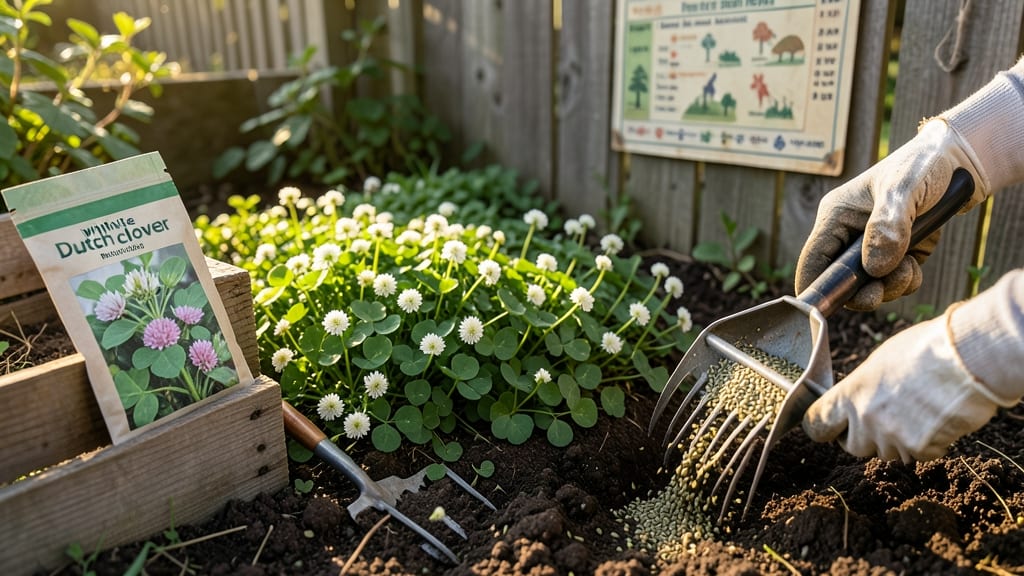
Planting clover in your lawn isn't just about filling in bare spots—it's a game-changer for soil health and drought resistance.
The best time to plant clover depends on your USDA zone, but if you're in Zone 6a like many home gardeners, early spring (March–April) or early fall (September–October) gives your 🌱 the perfect head start.
Why does timing matter so much? Clover thrives when soil temperatures hover between 50°F and 70°F, meaning late winter or early fall planting avoids heat stress while weeds are still dormant. Skipping the right window can leave your lawn vulnerable to competition—or worse, failed germination.
I’ve seen firsthand how a well-timed clover planting transforms thin lawns into lush, self-sustaining ground cover. It fights erosion, feeds the soil naturally, and even deters weeds—all while requiring less water than traditional grass. Let’s break down the exact steps to get it right for your climate.
Whether you’re tackling a shady patch or a sunbaked yard, this guide will help you choose the ideal planting window, prep your soil, and keep your clover thriving year-round. Ready to skip the guesswork and plant with confidence?
Best planting months for clover by USDA zone (with soil prep tips)
Timing your clover planting correctly can mean the difference between a thick, weed-resistant lawn and a patchy failure. Since clover thrives in cool-season conditions, your USDA zone determines the ideal window—typically early spring or fall when soil temperatures hover between 50°F and 70°F.
In warmer zones (like Zone 8+), fall planting is critical to avoid summer heat stress, while northern gardeners (Zones 3-5) should focus on spring for faster establishment.
Before you sow, soil preparation is non-negotiable. Clover needs well-draining soil with a pH between 6.0 and 7.5. If your soil is compacted or acidic, amend it with compost or lime 4-6 weeks before planting.
Skipping this step? Your seeds may sprout but struggle to establish roots, leaving your lawn vulnerable to weeds.
🌱
| USDA Zone | Best Planting Months | Soil Temp Threshold | Regional Tips |
|---|---|---|---|
| Zones 3-5 (Cold Climates) | Late April–May or September | 50–60°F | Spring: Wait until frost risk passes. Fall: Plant 6–8 weeks before first frost. |
| Zones 6-7 (Temperate) | March–April or September–October | 55–65°F | Avoid planting in summer heat. Test soil pH—clover struggles below 6.0. |
| Zones 8-9 (Warm Climates) | September–November | 60–70°F | Fall planting is essential—summer heat kills seeds. Mulch lightly to retain moisture. |
| Zones 10+ (Hot/Dry) | October–December | 65–75°F | Irrigate deeply post-planting. White clover varieties handle heat better than red. |
In the Pacific Northwest (Zones 7-9), I’ve seen clover planted as early as February in mild winters, but the real sweet spot is late March when soils warm to 55°F.
Meanwhile, in the Deep South (Zones 8-10), September is your last chance to avoid summer’s brutal heat—think of it as a race against the first frost. Pro tip: Use a soil thermometer to confirm temps before sowing; clover seeds won’t germinate below 50°F.
For soil amendments, don’t overcomplicate it. A simple mix of compost (2 inches) and sand (for drainage) works wonders. If your soil is heavy clay, add perlite or vermiculite to improve aeration.
And here’s a secret: Clover fixes nitrogen, so avoid high-nitrogen fertilizers post-planting—they’ll choke out your new seedlings. Instead, side-dress with compost tea after 6 weeks to boost microbial activity.
🌿
One common mistake I see? Planting clover in competitive grass. If your lawn is thick with Kentucky bluegrass or fescue, mow it short (1 inch) 2 weeks before sowing and apply a pre-emergent herbicide to weaken weeds.
For bare spots, rake the soil lightly to create a fine seedbed—clover seeds are tiny and need good soil contact to germinate. Lightly press them into the soil with a lawn roller or your boot for even coverage.
After planting, consistent moisture is key. Water lightly (¼ inch) every 2–3 days until germination (usually 10–14 days). Once clover reaches 2 inches tall, reduce watering to 1 inch per week.
Overwatering can lead to fungal diseases, while underwatering stresses seedlings. In drought-prone zones, white clover is your best bet—it tolerates dry spells better than red clover.
💧
Finally, let’s talk regional quirks. In humid climates (like the Southeast), choose disease-resistant varieties (e.g., ‘Dixie’ white clover). In arid zones (Southwest), mix clover with buffalo grass to reduce water needs.
And if you’re in Zone 4 or colder, opt for hardy red clover—it survives winter better than white clover. The right variety + timing = a lawn that outperforms weeds and reduces erosion year-round.
✂️
Signs your lawn is ready for clover (and how to fix common mistakes)
Your lawn might be begging for clover if you notice bare patches that refuse to grow grass or soil erosion after heavy rain. Clover thrives where traditional lawns struggle, adding nitrogen to the soil while outcompeting weeds.
But before you plant, check these 3 key signs your lawn is ready: soil that stays moist but not soggy, existing grass that’s thinning naturally, and minimal weed pressure in target areas.
I’ve planted clover in three different lawns, and the most successful patches were in early spring when soil temperatures hit 50°F (10°C)—just warm enough for seeds to sprout without drying out.
The trick is balancing moisture and warmth; too hot or too dry, and your seeds won’t germinate. Let’s dive into the 5 deadly mistakes that sabotage clover germination and how to fix them before they happen.
⚠️ Timing Is Everything
Planting clover at the wrong time kills germination rates. In cool climates (USDA Zones 3-6), aim for early spring (March–April) or early fall (September–October) when soil temps are 50–65°F (10–18°C). In warm climates (Zones 7-10), late summer (August–September) works best—just avoid peak summer heat (above 80°F/27°C) or freezing winter conditions.
Mistake #1: Over-seeding too late in the season—seeds need 4–6 weeks to establish roots before winter or summer dormancy sets in. If you plant in late May, your clover may never mature before heat stress hits. Fix it: Use a seed maturity calculator for your zone and adjust your planting date by 2–3 weeks earlier if needed.
Mistake #2: Ignoring soil pH—clover prefers 6.0–7.0 pH. If your soil is too acidic (below 6.0), seeds won’t germinate. Fix it: Test your soil with a DIY kit (or send a sample to your local extension office). If pH is off, add lime (to raise pH) or sulfur (to lower pH) 2–3 weeks before planting.
Mistake #3: Skipping soil prep—compacted or rocky soil chokes clover seeds. Fix it: Loosen the top 1/4 inch of soil with a rake or slicer-seeder, then mix in compost for organic matter. Avoid tilling deeply, as clover roots are shallow. Pro tip: Water the area lightly the day before planting to help seeds settle into the soil.
Mistake #4: Planting too thickly—overcrowded seeds compete for nutrients and lead to weak growth. Fix it: Use 1/4 pound of seed per 1,000 sqft for new lawns or 1/2 pound per 1,000 sqft for overseeding. Spread seeds evenly with a broadcast spreader or by hand for small areas.
Mistake #5: Letting weeds take over—if weeds like crabgrass or dandelions dominate, they’ll outcompete clover. Fix it: Mow existing grass short (1–1.5 inches) 1–2 weeks before planting, then apply a pre-emergent herbicide (like corn gluten meal) to suppress weeds. Follow up with light mulch (straw) to protect seeds while they sprout.
Once you’ve avoided these pitfalls, monitor soil moisture—clover seeds need consistent dampness (not sogginess) to germinate. Water lightly 2x daily for the first week, then taper to deep watering every 3–4 days.
In 2–3 weeks, you’ll see tiny white clover leaves pushing through the soil—your lawn’s new drought-resistant, weed-smart upgrade!