
Plants
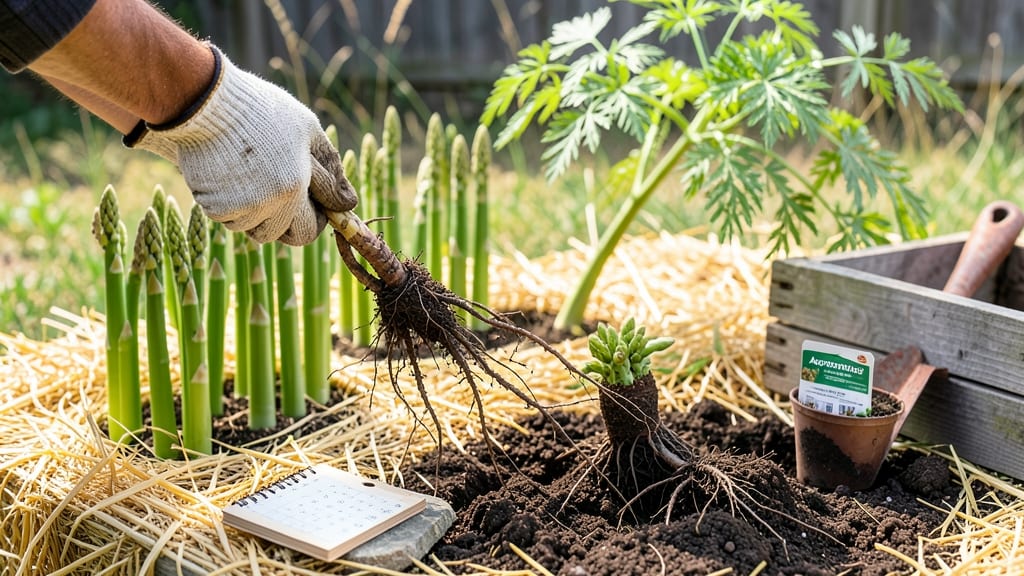
Timing your asparagus planting in Maine isn’t just about the calendar—it’s about beating frost, preparing soil, and setting up roots for a strong harvest that lasts years.
With Zone 5b-6a frost dates swinging wildly from year to year, planting too early risks frozen crowns, while waiting too long stunts growth before summer’s peak. The key? A 6-8 week window before your last frost date—usually by early April—but with soil prep that accounts for Maine’s rocky, acidic earth.
Most gardeners assume asparagus is a one-and-done spring task, but the real secret lies in soil temperature and frost protection.
Cold frames or thick mulch can shave critical weeks off your planting window, while ignoring soil pH (aim for 6.5–7.5) means your crowns will struggle even if the timing is perfect.
I’ve seen firsthand how a few extra degrees in soil warmth can mean the difference between a thriving patch and a sad, sparse harvest.
Here’s what I’ll show you: the exact frost-date math for Maine, how to test soil readiness, and the 3 mistakes that trip up even experienced gardeners.
Whether you’re a first-timer or a veteran grower, these tips will help you skip the trial-and-error and get spears in your kitchen by June—not next year, but this year.
Let’s cut to the chase: your asparagus crowns are waiting. The ground isn’t. Planting at the right moment isn’t just about timing—it’s about giving your 🌱 asparagus the head start it needs to outlast Maine’s unpredictable spring. Ready to dig in?
Maine’s ideal asparagus planting window by frost dates
Maine’s Zone 4-5 climate demands precision when planting asparagus crowns—not seeds. Unlike warmer regions, timing here hinges on frost-free soil and last-frost dates, which vary yearly. Plant too early, and your crowns risk frost damage; too late, and you delay harvests by a full season.
The key is 6-8 weeks before your area’s last frost, typically mid-March to early April in most of Maine.
Asparagus crowns thrive when soil temperatures hit 50°F (10°C), signaling root activation. In Maine, this usually aligns with late April to early May, but early thaws can push it earlier.
Use a soil thermometer to confirm—planting in cold soil stalls growth. For extended-season planting, some gardeners opt for late-summer crowns, but this requires frost protection and isn’t recommended for beginners.
📅 Last frost dates in Maine: Southern Maine (Zone 5b): May 1-15; Northern Maine (Zone 4b): May 15-30. Adjust your planting window by subtracting 6-8 weeks from these dates. For example, if your last frost is May 10, aim for mid-March planting. Pro tip: Check the Maine State Climate Office for yearly updates.
For Maine’s Zone 4-5 gardeners, the ideal planting window is March 15 to April 15, but flexibility is key. If you’re in Southern Maine (Zone 5b), you might push planting to early April for a slightly later harvest.
In Northern Maine (Zone 4b), err on the earlier side (mid-March) to avoid late frosts. Always monitor forecasts—a late April frost can devastate young crowns.
Adjusting for late frosts or early thaws requires strategy. If a hard freeze hits after planting, cover crowns with straw mulch (4-6 inches) or a frost cloth. For early thaws, delay planting until soil warms to 50°F (10°C), even if it’s past your usual window.
Patience here prevents root rot from soggy, cold soil. Pro move: Plant 1-inch-deep trenches to insulate roots during temperature swings.
Extended-season planting in Maine is not recommended for asparagus crowns, but some gardeners attempt it in late summer (August-September) for a second-year harvest. If you try this, use frost blankets and plant in well-draining, raised beds to prevent waterlogging.
The risk of disease increases in cooler months, so this method is best for experienced growers with frost-proof setups.
Once you’ve nailed the planting window, focus on soil prep. Asparagus hates waterlogged soil and thrives in sandy loam with pH 6.5-7.5. Maine’s native soil is often acidic and rocky, so amend with compost and lime 4-6 weeks before planting.
A 6-inch-deep trench filled with amended soil gives roots the deep, loose environment they crave.
After planting, mulch heavily (4-6 inches) with straw or wood chips to insulate roots and retain moisture. In Zone 4-5, mulch acts as a frost buffer and weed barrier. Avoid organic mulches like leaves—they compact and suffocate roots.
Water deeply but infrequently (1-1.5 inches per week) to encourage deep root growth. The first year, skip harvesting spears—let the plant focus on root establishment.
Remember: Asparagus is a perennial with a 3-year payoff. Year 1 = no harvest (just foliage); Year 2 = limited harvest; Year 3+ = full production. Planting at the right time ensures your Maine garden yields spears for decades, not just seasons.
With the right frost timing and soil prep, you’ll be feasting on homegrown asparagus by June or July—years before!
Soil preparation and frost-protection tips for Maine gardens
Maine’s acidic, rocky soil can challenge asparagus growth, but with the right prep, you’ll get a thriving perennial harvest for years. Start by testing your soil’s pH level—asparagus thrives in neutral to slightly alkaline soil (6.5–7.5).
If your soil is too acidic, amend it with lime or wood ash in early fall or late winter.
Next, focus on drainage. Asparagus roots rot in soggy soil, so raise beds or mix in compost and coarse sand to improve aeration. For rocky soil, dig in well-rotted manure or leaf mold to break up compacted areas and encourage root spread.
⚠️ callout warning ⚠️
Cold soil (below 50°F) stunts root growth. Wait until soil temps reach 50–60°F (use a soil thermometer) before planting crowns. Late frosts in May can kill tender shoots—cover beds with frost cloth if frost is forecasted after planting.
To harden asparagus plants for Maine’s late frosts, start by planting crowns 6–8 weeks before your area’s last frost date. Use black plastic mulch in early spring to warm the soil faster and suppress weeds. For extra protection, build a low cold frame over newly planted crowns until shoots emerge.
Mulch heavily with straw or shredded leaves once spears appear to retain moisture and regulate soil temperature. Avoid organic mulches like grass clippings, which can introduce weeds or compact soil. In fall, add a 3-inch layer of compost to replenish nutrients lost during harvest.
For extended-season growth, use row covers in early spring to trap heat and push harvest dates earlier. Remove covers when spears emerge to prevent overheating. In late fall, apply straw mulch to insulate roots and protect against early frosts that can damage tender foliage.
Finally, monitor for voles or slugs, common pests in Maine gardens. Use copper tape barriers or diatomaceous earth around beds to deter slugs, and set traps for voles if you notice gnawed crowns.
With these prep steps, your asparagus will establish strong roots and reward you with abundant spears for decades.