Plants
Timing your bell pepper planting in Virginia can mean the difference between a bountiful harvest and wasted effort—especially when those 60°F soil temperatures are just around the corner.
If you've ever watched your pepper plants wilt after a late frost or struggled to get them to thrive in Virginia's 6a-7b zones, you know how crucial the right schedule is.
The key to success lies in waiting until after your last frost date, which typically falls around April 15 but can vary by region. Planting too early risks stunted growth, while waiting too long might leave you scrambling to get peppers in the ground before summer heat sets in.
I'll walk you through the exact windows and strategies to ensure your 🌶️ bell peppers thrive from seed to harvest.
Whether you're starting seeds indoors or sowing directly into the garden, understanding Virginia's unique climate patterns is the first step. We'll cover how to adjust for your specific zone, when to expect those critical 165 frost-free days, and even how to extend your growing season for late varieties.
Ready to grow peppers that actually produce? Let's dive into the frost-proof timeline that will have you enjoying homegrown 🌶️ bell peppers from July through October—no guesswork required.
Virginia’s bell pepper planting timeline by USDA Zone (with frost dates)
Bell peppers thrive in warmth but wilt in cold, so Virginia gardeners must time planting carefully. The last frost date varies by zone—from April 15 in Zone 5 to March 15 in Zone 8.
Plant too early, and frost will kill tender seedlings; too late, and your harvest may arrive after the first frost in October. Let’s break down the perfect planting windows for each zone to maximize your bell pepper yield.
Soil temperature is critical for germination. Bell peppers need soil that’s at least 60°F (15°C)—cold soil delays sprouting or causes seed rot. In Virginia, this typically aligns with mid-April to early May, but Zone 5 gardeners may need to start indoors earlier.
Always check your local USDA zone map and monitor soil temps with a thermometer for accuracy.
🌱 Key Takeaway: Wait until all frost risk has passed and soil is warm enough. For direct sowing outdoors, aim for 2-4 weeks after your last frost date. If planting indoors, start 8-10 weeks before the last frost to give seedlings time to mature before transplanting.
In Zone 5, where frost lingers longer, start seeds indoors by March 1 for transplanting after the May 1 window. Use grow lights or a sunny windowsill to keep seedlings strong until soil warms.
For Zone 8, you can sow directly outdoors as early as March 1, but protect young plants with row covers if nights dip below 50°F (10°C).
Bell peppers need 70-90 days to mature, so plan your planting to avoid early fall frosts. In Zone 5, aim for a July 1 harvest by planting in early May. In Zone 8, you can extend the season into October with late plantings in June.
Choose early-maturing varieties (like ‘Early Cal Wonder’) for shorter seasons or heat-tolerant types (like ‘Jupiter’) for longer harvests.
For direct sowing outdoors, wait until soil reaches 65°F (18°C) for faster germination. Test soil with a thermometer—cold soil delays sprouting by 1-2 weeks. If your soil is still chilly, use black plastic mulch to warm it faster.
Always plant seeds ½ inch deep and space them 12-18 inches apart for proper airflow and growth.
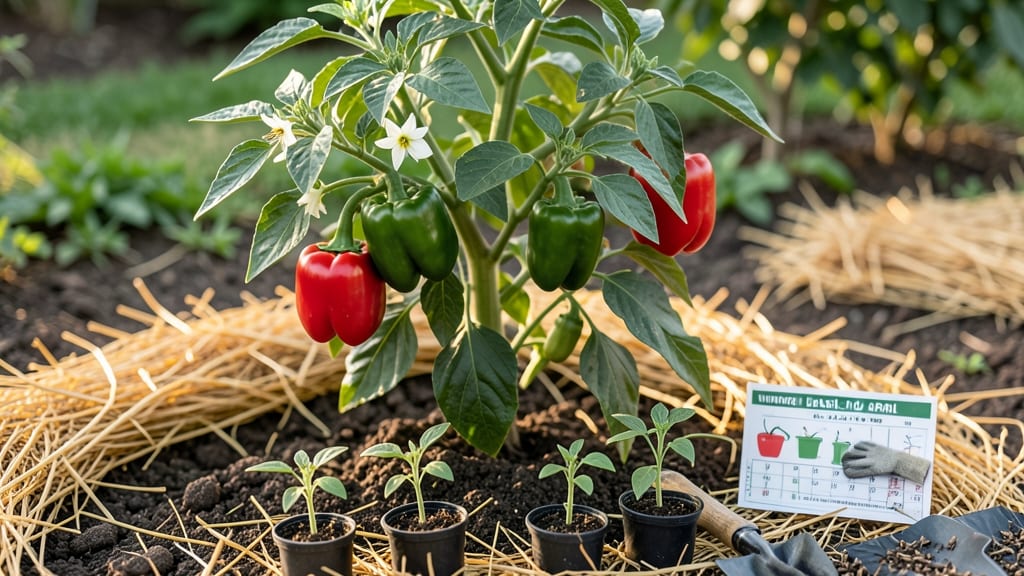
After transplanting, mulch around plants with straw or shredded leaves to retain moisture and regulate soil temperature. This is especially important in Zone 5-6, where temperature swings can stress young plants.
Water deeply once a week (or more in dry spells) to encourage strong root development. Avoid overhead watering to prevent disease risks like powdery mildew.
Monitor your plants for color changes—green peppers turn red, yellow, or orange when ripe. In Virginia, harvest begins in July for early plantings and can continue until first frost.
Pick peppers regularly to encourage more production. If frost threatens early, harvest green peppers and ripen indoors—they’ll keep for weeks in a cool, dark place.
Pro tip: Use a planting calendar to track your progress. Note the last frost date for your county (check the Virginia State Climate Office for local data) and adjust your timeline accordingly. With the right timing, you’ll enjoy homegrown bell peppers from summer through early fall! 🌶️
How to extend your Virginia bell pepper season (cold protection tips)
If you're in Virginia's Zone 5-6, those unpredictable spring frosts can turn your pepper dreams into a sad, wilted reality. But don't worry—I've got strategies to help you plant earlier or push your season later than the standard April 15 window.
With the right tools, you can enjoy homegrown 🌶️ bell peppers even when Mother Nature throws curveballs.
The secret lies in cold protection methods that give your peppers a fighting chance. Whether you're dealing with late frosts or early chills, these techniques will help you extend your growing season by 3-4 weeks on either end.
Let's dive into the best ways to shield your plants while keeping them happy and productive.
Bell peppers cannot tolerate frost—even a light freeze will destroy young plants. Soil must stay above 60°F for germination, and air temps should remain above 55°F for healthy growth. If you plant before May 1 in Zone 6, use row covers or cold frames to protect your investment.
Pro Tip: Test soil temp with a soil thermometer—if it's below 60°F, wait or use protective measures!
One of my favorite methods is using floating row covers. These lightweight fabrics allow sunlight and water to pass through while blocking 30-40% of wind chill and protecting against light frosts down to 28°F.
Simply drape them over your pepper plants like a cozy blanket, securing the edges with bricks or stakes. I've seen gardeners in Zone 5 successfully plant peppers as early as April 1 using this method.
For a more permanent solution, consider cold frames. These mini greenhouses trap heat from the sun and can raise soil temps by 10-15°F on chilly days.
You can start seeds indoors under a cold frame 4-6 weeks before your last frost date, then transplant them outside once the danger has passed. Just remember to ventilate on warm days to prevent overheating.
Another clever trick is planting heat-loving companion plants nearby. Basil and marigolds not only deter pests but also release heat as they grow, creating a microclimate that benefits your peppers.
I like to plant them in a 3-foot radius around my pepper beds—it makes a noticeable difference in early spring and late fall.
Don't forget about mulching! A thick layer of straw or black plastic mulch can raise soil temps by 5-10°F while suppressing weeds. I use black plastic in early spring to warm the soil faster, then switch to straw once the plants are established.
This dual approach gives my peppers the best of both worlds—warmer roots and moisture retention.
With these cold protection tips, you can safely extend your Virginia bell pepper season by 4-6 weeks on either end. Whether you're planting early for a jump-start or pushing your harvest into October, these strategies will help you beat the frost and enjoy homegrown peppers all season long.
Happy gardening! 🌱