
Plants
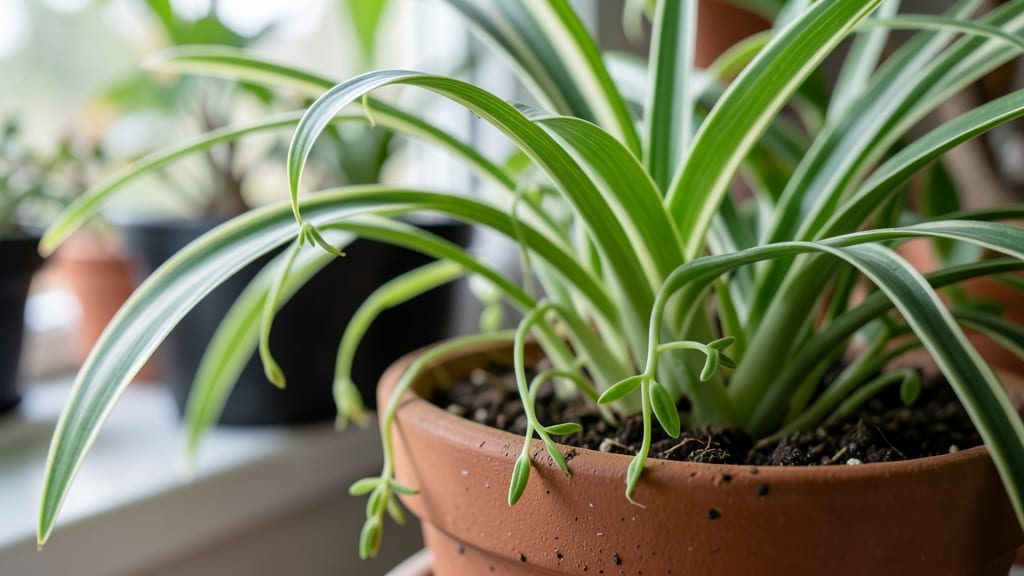
If your 🕷️ Spider Plant is growing leggy or its leaves are turning pale, you might be guessing wrong about how much light it really needs indoors.
The truth is, these hardy plants thrive in bright indirect light—but too much direct sun or too little brightness can stunt their growth or even harm them.
Most people assume their Spider Plant just needs "a sunny spot," but the reality is more nuanced. These plants actually prefer moderate to bright indirect light, which means positioning them near an east-facing window or a few feet back from a south-facing one.
Getting this right is the key to keeping your Spider Plant lush and full of those signature striped leaves.
In this guide, I’ll break down exactly how much light your Spider Plant needs—from the ideal brightness zones to what happens when you get it wrong.
You’ll learn how to spot signs of over- or under-lighting and where to place your plant for the best results, whether you’re working with natural light or artificial options.
By the end, you’ll know exactly where to put your Spider Plant so it stays healthy, vibrant, and ready to produce those adorable baby spiderettes. Let’s get started!

Spider plant light requirements: the 3 brightness zones for optimal growth
Your 🕷️ Spider Plant thrives in three distinct light zones, each producing dramatically different growth patterns. Most people assume "bright light" means direct sunlight, but that’s a common misconception—Spider Plants actually prefer filtered or diffused light that mimics their natural understory habitat.
Understanding these zones will help you avoid leggy stems and pale leaves while maximizing those prized striped foliage and spiderettes (baby plants).
The key difference between zones lies in light intensity and duration. Low light slows growth, medium light balances health, and bright indirect light produces the most vibrant plants. Even a small adjustment—like moving your plant 2 feet closer to a window—can transform its appearance.
Let’s explore what each zone looks like in your home and how to identify them using simple tests.
Pro Tip: Hold your hand near your plant’s leaves. If you can’t see your shadow clearly or the light feels soft (like a cloudy day), it’s likely medium to bright indirect light. If the light feels harsh or you see sharp shadows, it’s probably direct sunlight—which Spider Plants dislike.
In the low-light zone, your Spider Plant will survive but struggle. You’ll notice pale, almost lime-green leaves that lack the signature variegation, and the plant may develop long, thin stems as it stretches toward any available light.
This is called etiolation, and while it won’t kill your plant, it creates a leggy, unattractive appearance. The good news? Spider Plants are resilient—they’ll bounce back if moved to better light, though you may need to trim the elongated stems to encourage new growth.
The medium-light zone is where most Spider Plants thrive indoors. Here, you’ll see bold striped leaves with deep green centers and bright yellow edges, a sign of balanced photosynthesis. Plants in this zone produce moderate numbers of spiderettes (those cute little offsets) and maintain a compact, bushy shape.
This is the sweet spot for both beginners and experienced plant parents—it’s forgiving yet rewarding. Look for east-facing windows or spots 3-5 feet from south/west windows to create this environment.
For the bright indirect light zone, position your Spider Plant 2-3 feet from an east or north window or use a sheer curtain to diffuse south-facing light.
In this zone, your plant will grow vibrant, glossy leaves with intense variegation, and you’ll see frequent spiderettes forming along the stems. The key is avoiding direct sun, which can scorch the leaves.
Test your setup by observing the light at midday—if you see sharp shadows or hot spots on the leaves, your plant is getting too much direct sunlight.
Many people mistakenly assume that "bright light" means direct sunlight, but for Spider Plants, this is a recipe for disaster. Direct sun causes brown, crispy leaf tips and bleached patches on the foliage. Even just a few hours of harsh afternoon sun can damage your plant.
Instead, think of bright indirect light as morning sun or filtered light that’s strong but never harsh. A great test: If you can read a book comfortably near your plant without squinting, it’s likely the right brightness.
If your home lacks natural light, don’t worry—Spider Plants adapt well to artificial grow lights. Use a full-spectrum LED grow light placed 12-18 inches above the plant for 12-14 hours per day. This mimics the bright indirect light zone and encourages healthy growth.
Rotate your plant weekly to ensure even light exposure, preventing lopsided growth. For best results, pair artificial lighting with a reflective surface (like a white wall or aluminum foil) to maximize light efficiency.
Remember, the goal is to mimic the dappled light of a forest understory. Spider Plants in the wild grow under taller trees where sunlight filters through leaves, creating a soft, diffused glow.
By replicating this in your home, you’ll unlock your Spider Plant’s full potential—lush foliage, vibrant colors, and an abundance of spiderettes to propagate and share with friends. Start by identifying which zone your current setup matches, then make small adjustments to move closer to the ideal.
🌱
Signs your spider plant isn’t getting the right light (and how to fix it)
Your 🕷️ Spider Plant might be silently begging for better lighting. One of the first signs you’re getting it wrong is yellowing leaves—especially on the lower stems. This often means your plant is receiving too much direct sunlight, causing sunburn on the delicate foliage.
The edges may crisp up, turning brown, while the center stays green. This is your plant’s way of saying, "I can’t handle this harsh light!"
On the flip side, if your Spider Plant’s leaves are pale green or completely losing their stripes, it’s craving more brightness. These plants need moderate to bright indirect light to maintain their signature variegation.
Without enough light, they’ll stretch toward the nearest window, creating those unsightly leggy stems and sparse foliage. Think of it like a plant reaching for a handshake—it’s telling you it needs more light to thrive.
Another red flag? Brown tips on the leaves. While this can sometimes be a watering issue, it’s often linked to low humidity combined with insufficient light. Spider Plants are tropical and need consistent moisture in the air.
If your home is dry and the light is weak, the tips will crisp up as a stress response. This is your plant’s way of saying, "I need better light and a little more humidity!"
⚠️ WARNING: How Much Light Does Your Spider Plant REALLY Need Indoors? ⚠️
If your Spider Plant is producing fewer spiderettes (those adorable baby plants), it’s another sign of insufficient light. These little charmers form when the plant has enough energy from photosynthesis. Without proper lighting, your plant will focus all its energy on surviving rather than reproducing.
It’s like trying to bake a cake in a dimly lit kitchen—you’re just not getting the right conditions for success!
To fix these issues, start by rotating your plant every few weeks so all sides get even light exposure. If you notice leggy growth, move it closer to a brighter spot—like a shelf near an east-facing window or under a grow light.
For sunburned leaves, trim the damaged parts with clean scissors and move the plant further from the window or add a sheer curtain to diffuse the light. Your Spider Plant will thank you with vibrant new growth and plenty of spiderettes!
For those with artificial lighting options, a 15-watt LED grow bulb placed 12 inches above the plant can mimic natural light perfectly. Just remember: consistency is key. Spider Plants need 4-6 hours of indirect light daily, whether it’s natural or artificial.
If you’re unsure whether your current setup is working, observe your plant’s leaves over a week. Are they staying green and firm? If yes, you’ve got the light just right!