
Plants
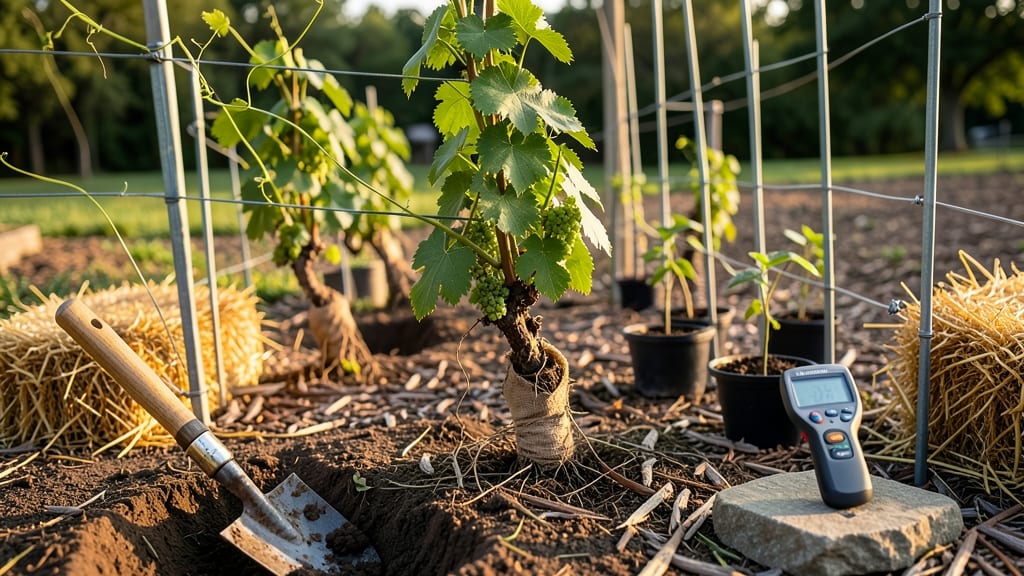
Planting grapes in North Carolina at the wrong time means risking frost damage—or worse, losing your entire crop before it even takes root.
The key to success lies in understanding your local microclimate, whether you're in the Piedmont's rolling hills or the Coastal Plain's milder zones, because those few weeks between frost dates can make or break your harvest.
I’ve grown 🍇 grapes here for years, and the best window—when to plant grapes in NC—depends on whether you’re working with hardy Muscadines or delicate wine varieties.
Too early, and a late frost will wipe out your young vines; too late, and your plants won’t establish strong roots before summer heat hits. Let’s break down the exact months that work for your region.
Most gardeners in zones 6a-8b aim for late winter to early spring, but the real magic happens when you align planting with soil temperatures and last-frost dates. For example, Piedmont growers often start in March, while mountain areas might wait until April to avoid surprises.
I’ll show you how to check your local frost-free date and adjust for container vs. in-ground planting.
By the end, you’ll know not just when to plant, but which varieties thrive in NC’s climate—and how to protect them from those sneaky late frosts that can turn a great season into a total bust. Ready to get growing?
Optimal planting months for grapes in NC by variety and region
North Carolina’s three distinct climate zones—Coastal Plain, Piedmont, and Mountains—create unique planting windows for grapes. Each zone has different last frost dates and microclimates, so timing your planting is critical for success.
For example, the Coastal Plain typically has a March 15 last frost date, while the Mountains can delay planting until mid-April due to cooler temperatures.
Grapes in NC are generally planted as dormant bare-root vines in late winter to early spring, but the exact timing depends on your variety and region. Muscadine grapes, native to NC, are more frost-hardy and can handle earlier planting, while French-American hybrids and wine grapes like Cabernet Franc need warmer soil to establish roots quickly.
Let’s break it down by zone and variety for zero-frost success.
For Coastal Plain gardeners, February to March is ideal for planting Muscadine grapes, thanks to milder winters and earlier soil warming.
This zone’s warmer microclimates allow for earlier planting, but always check your local frost dates—even Coastal NC can experience late frosts in March. French-American hybrids like Norton can also be planted in March, but ensure soil temperatures are above 50°F to prevent root rot.
In the Piedmont region, where last frost dates typically fall around March 15, aim to plant Muscadine grapes in March and French-American hybrids in early April. Wine grapes like Cabernet Franc are more sensitive and should wait until April when soil temperatures reach 55°F.
The Piedmont’s variable spring weather means you’ll need to monitor forecasts closely—late frosts can devastate young vines.
Gardeners in the Mountains face the greatest frost risks, with last frosts often occurring in mid-April. This makes April to May the safest window for planting Muscadine grapes and French-American hybrids, while wine grapes should wait until late April or May.
If you’re eager to start earlier, consider container growing to move vines indoors during cold snaps or use frost cloth for added protection.
Soil preparation is just as critical as planting timing. Work in compost or well-rotted
How to time grapes planting for zero-frost success in NC’s unpredictable spring
North Carolina’s unpredictable spring frosts can turn a promising grapevine into a sad, frozen memory if you plant too early. Unlike other crops, grapes are particularly vulnerable during their first growing season, so nailing the exact planting window for your county is critical.
The key? Combining frost-free date calculators, soil temperature checks, and local agricultural extension data to create a custom timeline for your specific microclimate.
Most NC gardeners make the mistake of following generic planting charts without accounting for their specific last frost date or elevation. For example, the Piedmont region typically sees its last frost around March 15, while mountain counties like Asheville can experience late frosts well into April.
Planting grapes too soon means risking frost damage to emerging buds, while waiting too long delays vine establishment and reduces yield potential.
⚠️ callout warning
Grapes need soil temperatures above 55°F (13°C) to root properly. Many NC gardeners plant dormant canes in February, only to see them fail because the ground is still too cold. Use a soil thermometer to verify—wait until March or April in most counties. For mountain regions, April planting is often safest even for frost-hardy varieties like Norton.
Start by checking your county’s average last frost date through the NC State Climate Office or NC Agricultural Extension Service. These resources provide hyperlocal frost data that accounts for elevation and topography. For instance, Raleigh’s frost-free date is typically March 20, while Charlotte’s is around March 28.
Add a 2-3 week buffer to this date for planting—this accounts for unpredictable late frosts and gives your vines time to establish roots before summer heat arrives.
Next, use a frost-free date calculator like the one from the Old Farmer’s Almanac or Almanac.com to generate a 10-year average for your zip code. These tools factor in historical data to predict 90% frost-free probabilities.
For example, if your calculator shows a May 1 frost risk in your area, aim to plant 4-6 weeks before that date—around mid-to-late March. Pair this with a soil temperature gauge to confirm readiness; grapes planted in 45°F (7°C) soil will struggle to root.
For added protection against late frosts, consider these three low-cost strategies: First, use frost cloth or row covers during the first 2-3 weeks after planting. Second, plant near a south-facing wall or trellis to absorb and radiate heat.
Third, choose frost-resistant varieties like Muscadine or Norton, which can tolerate brief dips to 20°F (-7°C). Even with these precautions, monitor your local National Weather Service forecasts for frost warnings in early spring.
Once you’ve pinpointed your planting window, prepare your site by installing a trellis system at least 2 weeks before planting. Grapes need sturdy support from day one, and burying posts in well-draining soil (amended with compost and sand) ensures stability.
Water deeply immediately after planting to encourage root growth, then maintain 1 inch of water per week until establishment. With the right timing and care, your vines will burst into growth just as the frost risk fades—setting you up for a bountiful harvest by late summer.